

Sri Lanka’s latest setback is not simply about losing a tournament. It is about what happens when cricket administration and political authority repeatedly collide, and the international game decides that institutional independence must come before hosting privilege. Sri Lanka was supposed to have a place in history in February 2027.
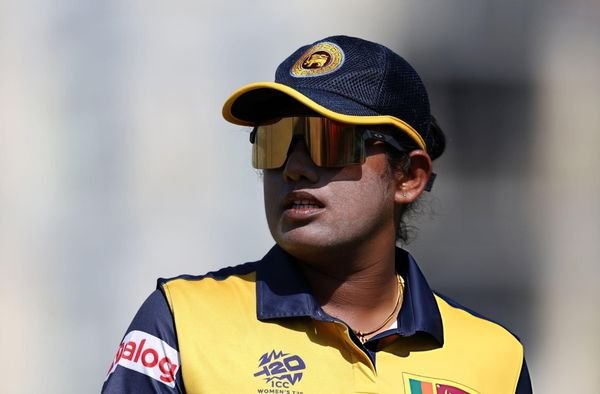
Instead, it has lost the right to host the inaugural ICC Women’s Champions Trophy, turning what was meant to be a landmark moment for women’s cricket into another chapter in the island nation’s continuing cricket governance crisis.
The decision to move the six-team tournament out of Sri Lanka is significant not merely because a major ICC event has been taken away, but because it follows a pattern that the country has already experienced. In 2023, Sri Lanka Cricket was suspended by the International Cricket Council over concerns surrounding government interference in the administration of the sport.
The ICC specifically said SLC was in serious breach of its obligation to manage its affairs autonomously and without government intervention. The immediate consequence was severe. Although Sri Lanka remained eligible to compete in international cricket, the ICC removed the 2024 Men’s Under-19 World Cup from the country and shifted it to South Africa.
Nearly three years later, the same fundamental issue has returned to the centre of the conversation. The Women’s Champions Trophy was originally awarded to Sri Lanka as part of the ICC’s long-term plan to expand and strengthen women’s international cricket. The decision was made through a competitive bidding process, with Sri Lanka selected to host the inaugural six-team event.
The tournament was initially scheduled for a different window, but the ICC Board subsequently moved it to February 14 to 28, 2027. That makes the latest development particularly disappointing. Sri Lanka was not merely given a cricket tournament. It was given an opportunity to establish itself as an important destination for the rapidly expanding women’s game.
Instead, administrative instability has once again overshadowed the cricket. Prakash Shaffter, secretary of the Transformation Committee, confirmed the development to the Sunday Times. “Yes, it has been moved out of Sri Lanka,” Shaffter said. “It will be played at another venue, but as of now, I am not sure where it will be played.” The uncertainty surrounding the replacement venue is one issue. The larger question is what happens next for Sri Lankan cricket.
The country has continued to operate under a Transformation Committee after the government intervened in the administration of SLC. Recent developments have underlined the scale of the restructuring challenge. Reuters reported in April that a new nine-member interim committee had been appointed following the resignation of the previous board, with former Sri Lankan cricketers Kumar Sangakkara, Roshan Mahanama and Sidath Wettimuny among those involved. The committee was tasked with working towards changes in governance and transparency.
From the ICC’s perspective, the issue is straightforward. International cricket cannot function effectively if national boards are unable to operate independently. The ICC’s decision in 2024 to lift Sri Lanka’s suspension demonstrated that the governing body was willing to restore normal relations when it believed SLC was no longer breaching its membership obligations. But lifting a suspension is not the same as declaring every governance concern permanently resolved.
That distinction is crucial. Sri Lanka’s latest loss should therefore be viewed less as a punishment for one administrative episode and more as a consequence of a credibility problem that has refused to disappear. There is also a sporting question that cannot be ignored. The tournament is expected to feature only six teams, making every qualification place valuable. Sri Lanka’s position in the qualification picture could now become complicated because the country was originally the designated host. The ICC will need to clarify whether Sri Lanka’s removal as host changes the qualification pathway or whether the team remains eligible on sporting merit.
That decision will matter because hosting and qualification are two very different privileges. A country should not receive automatic competitive access merely because it was once scheduled to stage the tournament. For women’s cricket, meanwhile, the priority must be continuity. The inaugural Champions Trophy is supposed to be another step in a rapidly expanding calendar.
The ICC’s current women’s programme reflects a broader push towards more international opportunities, with a six-team Champions Trophy included in the 2025-29 Future Tours Programme. The event therefore needs a host that can provide more than stadiums and logistics. It needs certainty, independence, infrastructure and an administration capable of working with the ICC without recurring institutional conflict.
Sri Lanka has the cricket culture and the venues. What it needs now is governance that inspires the same confidence. The loss of the Women’s Champions Trophy should be treated as a wake-up call rather than simply another embarrassment. Sri Lankan cricket has already seen an ICC suspension and the relocation of a World Cup.
Losing another global event suggests that the underlying problem remains unresolved. The irony is difficult to miss. At a time when women’s cricket is being given more space, more tournaments and greater global visibility, Sri Lanka has lost one of the most significant events it was supposed to host. The next victory for Sri Lanka may not come on the field. It may have to come in the boardroom.

