

A Commonwealth Games medal is supposed to be more than a moment of national pride. It is meant to be evidence that somewhere in India, a young athlete found a coach, a ground, a training system and enough institutional support to turn potential into performance. But what happens after the podium ceremony is over?
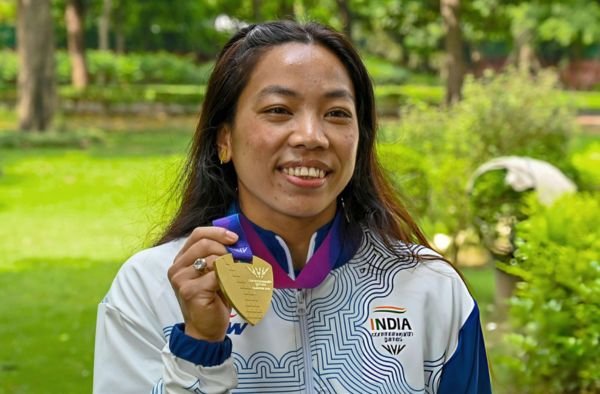
That question has become increasingly important after Glasgow 2026, where India finished with 39 medals and several states produced athletes who have now become symbols of sporting possibility. Yet a recent Times of India analysis of state sports departments reveals an uncomfortable gap between sporting success and the systems that are supposed to sustain it. The investigation found that while some states actively celebrate their athletes and promote grassroots sport, others have been remarkably quiet even after producing Commonwealth medallists.
The contrast is particularly striking in Haryana, India’s most prolific sporting state at the Glasgow Games. The state produced 11 medallists, including seven gold, two silver and two bronze across boxing, athletics, wrestling and para sport. Yet, as the Times of India found, the state’s official sports department social media presence did little to acknowledge those achievements.
This is not to suggest that a social media post creates a champion. It does not. But visibility is part of building a sporting culture. When a teenager in Rohtak, Bhiwani or Hisar sees someone from a similar background succeed, the medal becomes more than a statistic. It becomes evidence that sporting success is possible.
Haryana’s larger sports ecosystem demonstrates what sustained state intervention can achieve. Its sports policy has historically combined financial incentives, government employment and grassroots programmes. The state has also operated a large network of sports nurseries, with government documents recording more than 1,100 nurseries intended to give young athletes access to structured training.
The state has continued to expand its talent pipeline. Haryana’s Sports Department currently runs registration for sports nurseries and has also been involved in selecting athletes for Khelo India State Centres of Excellence. The state’s government has also said that it has transferred hundreds of crores in rewards to sportspersons and provided government employment to outstanding athletes. That is the difference between rewarding success and creating a pathway towards it. Cash awards may encourage athletes, but infrastructure, coaching, nutrition, competitions and employment security determine whether a child can remain in sport long enough to become an elite athlete.
Manipur offers another fascinating contradiction. The state has produced some of India’s greatest weightlifters, including Mirabai Chanu, and Glasgow added four more Commonwealth medallists from the state: Chanu, Rishikanta Singh, Bindyarani Devi and Jadumani Singh. Yet the Times of India found that the state’s official sports communication remained largely inactive, with its X account frozen since 2023.
The problem becomes even clearer in Rajasthan. Arundhati Choudhary’s Commonwealth gold in Glasgow should have been an opportunity to create a new sporting narrative for the state. Instead, the Times of India found that the Rajasthan Sports Department’s Facebook page had not posted since April 2012. This raises a bigger question about how India measures sporting development. Is success simply the number of medals won, or should it also include the number of children entering sport, the quality of district-level facilities, the availability of coaches and the ability of athletes to continue competing after their first breakthrough?
Tamil Nadu provides a more encouraging example. Its Sports Tamil Nadu platforms have consistently highlighted athletes, sporting schemes and medal winners. The state’s 2026-27 budget also allocated ₹1,051 crore to sports and youth welfare, with plans for 10 Special Olympics centres and a daily one-hour sports and exercise session in government schools. The state has also announced measures aimed at identifying sporting talent early.
That approach matters because grassroots sport cannot survive on Olympic and Commonwealth Games cycles alone. A child should not have to wait four years for the state to tell them that sport matters.
The same principle applies to the sports that India risks losing from its medal pipeline. Badminton, wrestling, hockey, table tennis and squash were among the sports removed from Glasgow 2026, despite being major contributors to India’s previous Commonwealth success. If states want to retain their advantage in these disciplines, they need to invest between Games, not only celebrate athletes when the medals arrive.
India’s sporting transformation will ultimately be decided far away from the podium. It will happen in school grounds, district academies, local competitions and training centres where an unknown 13-year-old is deciding whether sport can actually become a career.
The Commonwealth medal is the headline. The real story is what happens next. States that understand this will not simply produce champions. They will produce generations of them. Those that do not risk turning their greatest sporting moments into memories, while the next generation waits for a system that may never arrive.

