

A disciplinary case that cast a shadow over the opening days of the World Athletics Championships has concluded with a two-year suspension for one of Ethiopia’s leading middle-distance runners. Diribe Welteji, a global medal contender in the women’s 1,500 metres, has been banned after being found at fault for missing a doping control, according to a ruling by the Court of Arbitration for Sport (CAS).
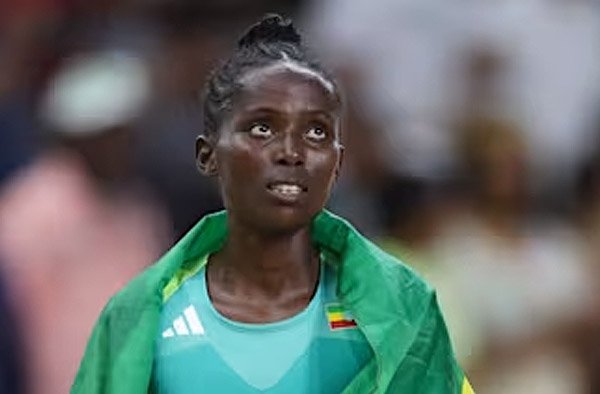
Welteji, who claimed silver in the 1,500 metres at the World Athletics Championships in 2023, was deemed “negligent” for failing to comply with an out-of-competition drug test attempt last year. The incident not only triggered a prolonged legal battle but also overshadowed the build-up to the championships, where she was initially expected to compete.
World Athletics had pushed for a four-year ban, arguing the violation warranted the maximum penalty. However, CAS reduced the sanction after determining that Welteji’s failure to provide a sample was not intentional. The revised suspension will run until June 2027, allowing the athlete, who will be 25 at the time to remain eligible to pursue qualification for the 2028 Summer Olympics.
The case stemmed from an attempted doping control in February 2025. According to CAS, drug control officers arrived at Welteji’s residence but were informed by her husband that she was asleep. Accounts of what followed differed, with witnesses offering conflicting versions of events before the testers ultimately departed without collecting a sample.
CAS said in its statement that drug testers arrived at Welteji’s property in February 2025 and were told by Welteji’s husband that she was asleep, and that witnesses disagreed about what took place after that until the testing staff left without a sample.
While the arbitrator acknowledged mitigating factors, including communication challenges, the ruling emphasised the responsibility placed on elite athletes to understand and comply with anti-doping procedures. CAS said its arbitrator accepted there were language barriers and that “certain technical and best practice departures occurred” but that “an athlete of (Welteji’s) calibre and experience should have known that she was required to comply regardless of the timing of the visit.”
The decision overturned an earlier verdict by an Ethiopian tribunal, which had cleared Welteji in August and paved the way for her planned appearance at the World Championships in Tokyo the following month. However, World Athletics challenged that ruling, and she was declared ineligible just one day before the competition began, a dramatic development that drew widespread attention.
Despite the ban, Welteji’s career achievements remain significant. She is regarded as one of the premier middle-distance runners of her generation and previously set a road mile record with a time of 4:20.98 in Riga, underlining her status as a consistent medal contender on the global stage.
The case once again highlights the strict liability athletes face under anti-doping regulations, where procedural missteps even without proven intent can lead to lengthy suspensions. For Welteji, the ruling represents both a major setback and a potential opportunity for redemption, with a return to competition still possible ahead of the next Olympic cycle.

