

A fresh legal battle involving Indian wrestling has reached the Supreme Court as the Wrestling Federation of India moved against a Delhi High Court ruling that allowed star wrestler Vinesh Phogat to compete in the selection trials for the 2026 Asian Games. The matter has once again brought attention to athlete rights, gender equity in sport and the ongoing friction between Phogat and the national federation following years of administrative controversy within Indian wrestling.
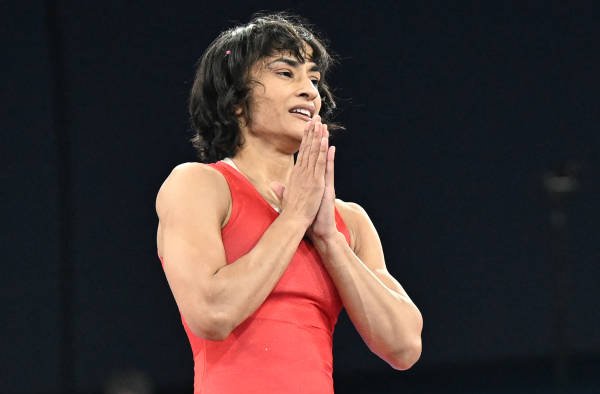
According to reports, the Supreme Court bench comprising Justice PS Narasimha and Justice Alok Aradhe is expected to hear the federation’s plea on Thursday. The appeal comes just days after the Delhi High Court granted interim relief to Phogat and directed that she be permitted to participate in the trials scheduled for May 30 and 31.
The High Court’s observations during the hearing drew widespread attention, particularly its remarks on motherhood and athlete inclusion. While granting relief, the court stated that the Wrestling Federation of India’s selection policy appeared “clearly exclusionary in nature” because it failed to consider athletes returning after maternity-related breaks.
The court further emphasised that motherhood could not become a reason for excluding female athletes from competitive opportunities. The bench acknowledged that Phogat’s absence from active competition was directly linked to the sabbatical she had taken following maternity leave and noted that such circumstances required a more inclusive interpretation of selection norms.
The order was passed by a Division Bench comprising Chief Justice Devendra Kumar Upadhyaya and Justice Tejas Karia while hearing an appeal filed by Phogat against an earlier interim order delivered by a single-judge bench. That earlier order had denied her immediate relief in her challenge against the federation’s selection criteria and a show-cause notice issued by WFI.
In a significant move aimed at ensuring fairness and transparency, the High Court also directed that the trials be conducted under strict monitoring. The court ordered the entire process to be video recorded and supervised by independent observers nominated by both the Sports Authority of India and the Indian Olympic Association. The decision was viewed as an attempt to eliminate concerns over bias or irregularities in the selection process, especially given the strained relationship between Phogat and the federation over the past few years.
Phogat had argued before the court that she should not be denied the opportunity to compete merely because she had been away from the mat due to maternity-related reasons. The Commonwealth Games and World Championships medallist maintained that her absence from recent tournaments was not voluntary but a result of her recovery and subsequent return to professional wrestling.
Her petition also highlighted broader concerns regarding the lack of clear provisions for women athletes balancing motherhood and elite sport. Legal experts and former athletes have since pointed out that the case could become an important precedent for maternity rights within Indian sports administration.
The latest dispute is part of a much larger and more turbulent chapter involving the Wrestling Federation of India. Relations between Phogat and the federation deteriorated significantly during the wrestlers’ protests of 2023, when several top Indian wrestlers, including Vinesh Phogat, Sakshi Malik and Bajrang Punia, publicly accused former WFI president Brij Bhushan Sharan Singh of sexual harassment and administrative misconduct.
The protests triggered nationwide debate over athlete welfare, governance standards and accountability in Indian sport. The controversy also led to international scrutiny, with United World Wrestling temporarily suspending the Wrestling Federation of India in 2023 over delays in conducting elections. Although the suspension was later lifted, tensions between several athletes and the federation have persisted. Phogat has remained one of the most vocal figures in demanding structural reforms within Indian wrestling. Over the last few years, she has frequently spoken about athlete dignity, transparency and equal treatment for women competitors.
The current case has therefore evolved beyond a simple selection dispute and entered a wider conversation surrounding women’s rights in sport. Many former athletes and legal observers believe the Delhi High Court’s observations regarding maternity leave could influence how federations across India frame future policies concerning women athletes.
Globally, sports organisations have increasingly moved towards stronger maternity protections in recent years. Several federations, including FIFA, WTA and World Athletics, have introduced reforms designed to protect rankings, participation opportunities and financial support for athletes returning after childbirth.
In India, however, policies addressing maternity breaks in elite sport remain limited and inconsistent across federations. The absence of standardised frameworks often leaves returning athletes dependent on discretionary decisions by sporting bodies. Meanwhile, the Wrestling Federation of India has defended its position by arguing that selection norms are necessary to maintain fairness and competitive standards. The federation’s appeal before the Supreme Court is expected to focus on preserving its autonomy in determining eligibility criteria for national selection.
The outcome of the case could have significant implications not only for Phogat’s Asian Games hopes but also for the future interpretation of athlete welfare policies within Indian sports governance.
Phogat remains one of India’s most decorated wrestlers, having won medals at the Commonwealth Games, Asian Games and World Championships during her career. Despite injuries and setbacks, she has consistently remained among the country’s leading names in women’s wrestling and a major figure in Indian sport.
With the Asian Games approaching and Olympic qualification cycles intensifying, the legal proceedings now place both the federation and the athlete under renewed public scrutiny. The Supreme Court’s decision could ultimately shape the balance between federation authority and athlete rights in Indian sport for years to come.

