

Indian badminton’s next big chapter is beginning to take shape, and at its centre stands a teenager who is quickly turning promise into performance. Unnati Hooda has entered a new phase of her career, breaking into the top tier of global women’s singles and signalling a shift in India’s competitive future.
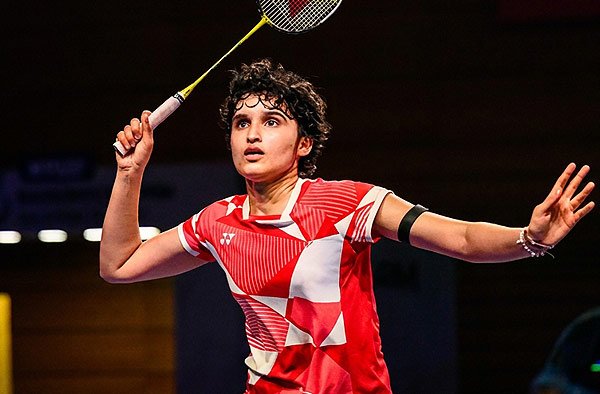
The 18-year-old has climbed to a career-high ranking of world No. 19 in the latest Badminton World Federation rankings released on May 5, 2026. With this milestone, she becomes only the third Indian women’s singles player in the modern BWF era to reach the top 20, joining an elite list that includes Saina Nehwal and PV Sindhu.
For Indian badminton, this is more than just a ranking update. It reflects continuity in a discipline where the country has consistently produced world-class athletes. From Olympic podium finishes to World Championship titles, women’s singles has long been India’s strongest suit, and Hooda’s emergence suggests that the next generation is ready to carry that legacy forward. Her rise has been built on steady progress rather than sudden breakthroughs. Over the past year, Hooda has accumulated crucial ranking points through consistent performances across BWF World Tour events. Exposure to high-pressure team competitions like the Uber Cup has also played a key role in accelerating her development, allowing her to compete alongside and against some of the best players in the world.
One of her standout performances came during the 2026 Uber Cup, where she delivered a composed straight games victory over Ukraine’s Polina Buhrova. Winning 21-19, 22-20, Hooda demonstrated not only her attacking skillset but also her ability to handle pressure in tight moments. Matches like these have underlined her growing maturity and ability to close out contests against international opponents.
Hooda’s journey began far from the global spotlight at the Chhotu Ram Stadium, a venue better known for producing wrestlers such as Sakshi Malik. Under coach Parvesh Kumar, she developed the fundamentals that now define her game. Introduced to badminton at the age of eight, she quickly progressed through junior circuits, winning district and state tournaments before making her mark nationally. Her early breakthrough came in 2022 when she won the Odisha Open, becoming the youngest Indian to claim a Super 100 title at just 14. That victory propelled her into the national spotlight and earned her a place in India’s Uber Cup squad the same year, offering invaluable exposure to elite competition.
Reflecting on her early ambitions, Hooda once said, “I am a big fan of PV Sindhu’s smashes. Growing up, I have always aspired to play like her. I’m hoping that I will get an opportunity to see her play and learn from her game,” a statement that highlights how closely her journey has been shaped by India’s badminton icons. Her growth since then has been evident. At the China Open in 2025, Hooda registered a significant win over PV Sindhu in the pre-quarterfinals, a result that marked her transition from a rising talent to a serious contender on the circuit.
Technically, Hooda’s game is built around aggressive stroke play, quick court coverage, and the ability to dictate rallies. However, breaking into the top 20 brings a different set of challenges. The margin between players ranked within this bracket is extremely narrow, and consistency becomes the defining factor. Established names such as Yeo Jia Min and Beiwen Zhang continue to push the level higher, making every tournament fiercely competitive.
For Hooda, the next stage of development will focus on refining defensive transitions, improving shot selection under pressure, and building the endurance required for deep tournament runs. Equally important will be her ability to adapt mid-match, a trait that separates top 10 players from the rest of the field. Her rise also comes at a crucial time for Indian badminton. With PV Sindhu entering the later stages of her career, the need for a new leading figure in women’s singles has become increasingly important. Alongside emerging players like Tanvi Sharma and Anupama Upadhyaya, Hooda represents a new wave that is already making its presence felt on the international stage.
The immediate challenge will be maintaining her position. Rankings in this range are volatile, and consistent quarterfinal and semifinal finishes will be necessary to stay within the top 20. At the same time, her growing reputation means she will no longer be underestimated by opponents, adding a psychological dimension to her matches.
Yet, for now, Hooda’s achievement stands as a defining moment. From training at a local academy in Rohtak to competing with the world’s best, her journey reflects both individual determination and the strength of India’s badminton ecosystem.
Breaking into the top 20 is not the final destination. It is the beginning of a far more demanding journey. And if her trajectory so far is any indication, Unnati Hooda appears ready for what comes next.

