

Every sporting nation eventually reaches a defining moment where success can no longer be measured by one extraordinary athlete. Instead, the question becomes whether an entire system can consistently produce champions.
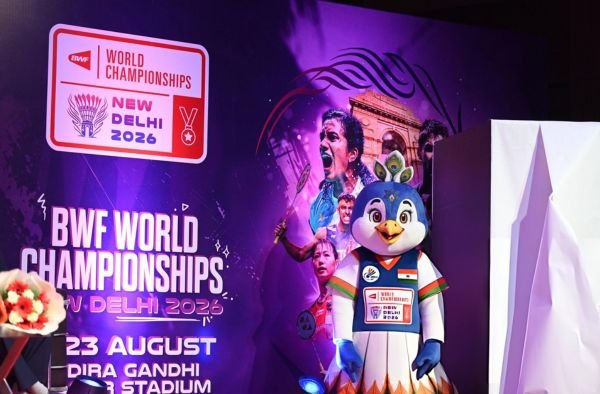
That is where Indian badminton finds itself ahead of the 2026 BWF World Championships in New Delhi. Since 2011, India has remarkably won at least one medal in every edition of badminton’s biggest tournament outside the Olympic Games.
Fifteen medals, comprising one gold, four silver and ten bronze, have elevated the country from being an occasional challenger to one of badminton’s most respected nations. Yet beneath those impressive numbers lies another story. Much of that success has revolved around a handful of names, particularly PV Sindhu.
Now, with India hosting the World Championships for the first time since 2009, the challenge is not merely to extend the medal streak. It is to demonstrate that Indian badminton has evolved into a system capable of delivering success across multiple events and generations.
The spotlight, naturally, falls once again on Sindhu. The former world champion enters the tournament fresh from winning the Japan Open, a timely reminder that she remains among the world’s elite despite battling injuries and fluctuating form over the past two seasons. Already India’s only world champion, Sindhu is also the country’s most decorated player at the World Championships with five medals, a record she shares with Chinese legend Zhang Ning.
Her opening match against Ireland’s Sophia Noble should present few difficulties. The road ahead, however, becomes significantly tougher. A projected pre-quarterfinal against China’s third seed Wang Zhi Yi is likely to determine whether Sindhu can mount another serious title challenge.
Should she overcome that hurdle, a probable quarter-final against Indonesia’s Putri Wardani awaits. The draw mirrors last year’s campaign in many ways. Sindhu defeated Wang before falling to Wardani in the quarter-finals. Having since beaten the Indonesian at the Singapore Open, she enters this encounter with renewed confidence.
For Sindhu, another medal would further cement one of the greatest careers in Indian sporting history. For Indian badminton, however, relying solely on Sindhu would represent a missed opportunity. Fortunately, this squad offers reasons to believe the responsibility is beginning to spread. Lakshya Sen remains India’s brightest men’s singles prospect. The Commonwealth Games champion and 2021 World Championships bronze medallist has endured an inconsistent year but has received a draw that offers genuine hope.
His opening-round clash against Austria’s Collins Valentine Filimon is manageable before a likely meeting with Thailand’s world champion Kunlavut Vitidsarn in the pre-quarterfinals. Their rivalry has become one of the most compelling among badminton’s new generation. While Kunlavut defeated Lakshya at the 2023 World Championships, the Indian gained valuable revenge at the Thailand Open earlier this year.
Should Lakshya clear that hurdle, another World Championships medal becomes a realistic possibility.
Perhaps the biggest indication of India’s growing strength lies in men’s doubles. Satwiksairaj Rankireddy and Chirag Shetty have fundamentally changed perceptions of what Indian badminton can achieve in doubles. For decades, India was largely dependent on singles specialists. Satwik and Chirag have rewritten that narrative, becoming Commonwealth champions, Asian Games gold medallists, former world No. 1s and consistent contenders on the BWF World Tour.
Seeded fifth, they begin with a first-round bye before likely facing either Scotland’s Alexander Dunn and Adam Pringle or Thailand’s Chaloempon Charoenkitamorn and Worrapol Thongsa-Nga. More importantly, the draw has opened up favourably. Potential quarter-final opponents Liang Wei Keng and Wang Chang remain dangerous, while a possible semi-final against Indonesia’s Fajar Alfian and Muhammad Shohibul Fikri would be a contest worthy of the biggest stage. Significantly, defending champions Seo Seung Jae and Kim Won Ho are positioned in the opposite half, meaning Satwik and Chirag would avoid them until a possible final.
Having claimed bronze in 2025, expectations will rightly be higher this year. The tournament also presents an opportunity for India’s emerging generation. Ayush Shetty may have drawn the shortest straw by opening against defending champion Shi Yu Qi, who has beaten him three times in the last nine months.
Yet such matches provide invaluable experience against the very best players in the world. Unnati Hooda continues her rapid rise after an encouraging season on the BWF circuit. A favourable opening match against Myanmar’s Thet Htar Thuzar could set up a second-round encounter with Canada’s experienced Michelle Li, providing another benchmark for one of India’s brightest young prospects.
Meanwhile, mixed doubles pair Dhruv Kapila and Tanisha Crasto continue carrying India’s hopes in a discipline where consistent international success has remained elusive. Women’s doubles pair Treesa Jolly and Gayatri Gopichand also represent genuine medal outsiders after steadily climbing the world rankings through impressive performances on the World Tour.
Collectively, India will field 14 shuttlers across five disciplines, reflecting the country’s growing depth. That depth has been built through sustained investment in grassroots programmes such as the Target Olympic Podium Scheme (TOPS), the Khelo India initiative and private academies led by coaches like Pullela Gopichand, whose academy has produced Olympic medallists, world champions and numerous international players. Together, these systems have transformed badminton from an individual success story into one of India’s strongest Olympic sports.
Home advantage could prove equally significant. The passionate support expected at New Delhi’s Indira Gandhi Indoor Stadium has historically lifted Indian players during major tournaments. Familiar conditions, vocal crowds and the emotional energy of competing at home can often make the difference in tightly contested knockout matches.
Yet home expectations also bring pressure. Every rally, every point and every defeat will unfold under intense public scrutiny. The challenge for India’s leading players will be to embrace that pressure rather than become consumed by it.
Ultimately, this World Championships is about far more than medals. It is about measuring the progress of Indian badminton after more than a decade of sustained excellence. If Sindhu wins another medal, it will add another remarkable chapter to an already legendary career. If Lakshya, Satwik and Chirag, or one of the younger players joins her on the podium, it will signal something even more important.
It will show that Indian badminton is no longer dependent on one champion carrying the nation’s hopes. It will confirm that the foundations built over the past 15 years are strong enough to support another generation.

