

The WNBA’s surge is no longer a story about one superstar. Caitlin Clark may have opened the door, but the numbers now suggest that a much larger transformation is underway. Women’s basketball is becoming appointment viewing, women’s sports are attracting new audiences, and broadcasters, sponsors and investors are beginning to treat that audience as a serious commercial force.
The latest Nielsen data offers perhaps the clearest evidence yet. According to a report released this week, women’s sports generated 28.6 billion minutes of viewing in the United States during the first half of 2026, an 18% increase from the same period in 2025. More than 122.5 million Americans, or over half the US population, are now interested in women’s sports. Nielsen also found that the proportion of people reporting “no interest” in women’s sports has fallen by 19% since 2023.
Front Office Sports reporter Ellyn Briggs shared the numbers on X, via Nielsen: “28.3 billion minutes of women’s sports were viewed in the first half of 2026, up 18% over 2025… A study conducted by the company also found that 52% of the U.S. population is now interested in women’s sports. (The share who report having “no interest” has dropped almost 20% in the last three years.)” The small difference between the 28.3 billion figure cited above and Nielsen’s subsequently reported 28.6 billion figure does little to alter the bigger picture. The audience is growing, and it is growing quickly.
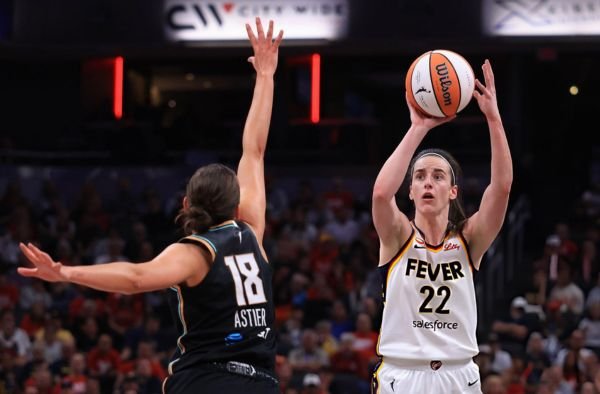
There is little question that Clark has been central to the WNBA’s modern commercial boom. Her arrival with the Indiana Fever transformed the team into one of the league’s biggest television and attendance draws, while simultaneously bringing a younger and more digitally engaged audience into the sport.
But reducing the WNBA’s growth to Clark alone would miss the larger story. The 2024 season, Clark’s rookie campaign, produced the WNBA’s most-watched regular season in 24 years. More than 54 million unique viewers watched games across national broadcast partners, while 22 regular-season telecasts averaged at least one million viewers. The Fever also recorded the highest home attendance for a WNBA team in a single season at the time, with 340,715 fans.
The important development since then is that the attention has begun to spread across the league. A’ja Wilson, Napheesa Collier, Breanna Stewart, Sabrina Ionescu, Angel Reese and Paige Bueckers are all part of a deeper star ecosystem. That matters because sustainable leagues cannot depend on one personality. They need rivalries, narratives and matchups that can hold an audience even when the biggest individual star is unavailable.
The Fever’s 2026 numbers illustrate that point. Indiana has repeatedly appeared in the season’s biggest audiences. Its matchup against New York averaged 2.58 million viewers on CBS in July, while an earlier Fever-Dream game averaged 1.7 million on ABC.
Another reason behind the boom is simple: the WNBA is much easier to find. Beginning in 2026, the league entered the next phase of its media strategy with games distributed across ABC, ESPN, ESPN2, NBC, Peacock, Prime Video, CBS, Paramount+, ION, USA Network and NBA TV. The 2026 schedule features a record 216 nationally distributed regular-season games.
That expansion is significant. Audiences cannot watch a sport they cannot easily access. The WNBA has moved from having limited windows to being present across traditional television and streaming platforms, giving fans more opportunities to discover teams and players.
The league’s long-term media agreements with Disney, NBCUniversal and Amazon also signal that broadcasters believe women’s basketball has become commercially valuable rather than merely a niche property. More than 125 regular-season and playoff games are scheduled for national distribution annually under the 11-year agreements.
Perhaps the most consequential development is happening away from the television screen. The WNBA’s new collective bargaining agreement has dramatically changed the economics of the league. The salary cap rises from $1.5 million in 2025 to $7 million in 2026, while the league projects more than $1 billion in player salaries and benefits over the seven-year agreement. Average salaries are expected to exceed $583,000 in 2026, while maximum salaries begin at $1.4 million. That is more than a pay story. It is an indication that the league is beginning to convert audience growth into structural growth.
And the WNBA is not operating in isolation. The NWSL is experiencing a similar rise in demand. At the halfway point of its 2026 season, the league was averaging 11,044 spectators per match, a 10% year-over-year increase and another indication that women’s professional sport is building a dependable consumer base.
The bigger shift, therefore, is cultural as much as commercial. Nielsen found that women make up more than half of the 16 million new sports fans identified in its research. The WNBA boom is not simply about Caitlin Clark, viral clips or record television ratings. It is about an audience that was once underestimated becoming visible, measurable and increasingly valuable.
The challenge now is to turn the boom into permanence. The next phase will depend on whether the WNBA can develop more stars, deepen rivalries, keep games accessible, invest in storytelling and continue converting casual viewers into lifelong fans.

