

When Cricket Australia sat down to decide who would lead the women’s team into its next chapter, the answer wasn’t the most obvious one. It wasn’t the most capped player, nor the loudest match-winner of the recent era. Instead, the selectors chose calm, care, and clarity and found it in Sophie Molineux.
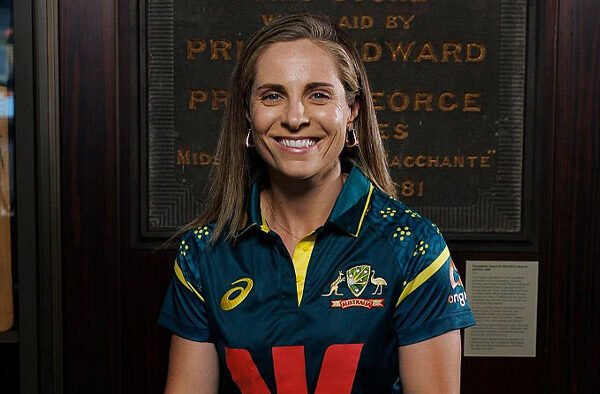
At 28, Molineux has been named Australia’s new long-term captain across formats, a decision that surprised many outside the inner circle but one that had been quietly building for years.
Leadership has followed Molineux from the very beginning. She captained Victoria’s Under-18 side, became the youngest captain in Melbourne Renegades history at just 21, and led Victoria in the Women’s National Cricket League by 22, even with senior figures like Meg Lanning and Ellyse Perry in the dressing room.
For Molineux, leading has never felt like an added responsibility; it has always been instinctive. “I’ve always enjoyed leadership,” she said after the announcement. “It’s something I’m really passionate about.”
Yet captaining domestic teams and captaining Australia are worlds apart. The role comes with history and weight; only six full-time captains have led Australia in all formats during Molineux’s lifetime, including Belinda Clark, Karen Rolton, Meg Lanning and Alyssa Healy.
There was a moment, selectors admit, when Molineux could have been considered earlier. Had injuries not intervened, she may have been a serious contender when Alyssa Healy took over following Lanning’s retirement. Instead, recurring shoulder, knee and foot issues disrupted her career. She missed all Test and T20I cricket in 2025 and was carefully managed during the ODI World Cup. Across eight years, she has represented Australia just 58 times.
On paper, rivals for the role appeared stronger. Tahlia McGrath and Ashleigh Gardner, both part of the formal interview process, boast far greater experience, with 119 and 190 international caps respectively. McGrath had already captained Australia 16 times, while Gardner has been central to one of the most dominant eras in women’s cricket. Even younger prospects like Phoebe Litchfield and Annabel Sutherland have logged more international appearances at a similar age.
The fact that Molineux received a call from national selector Shawn Flegler before Christmas spoke volumes about how highly she is rated within Australian cricket circles. She shared, “I didn’t really give myself much of a chance initially. But once I got that call, I thought, why not give it a crack?” Throughout an extensive interview process involving selectors, coach Shelley Nitschke and the Cricket Australia board, one trait consistently stood out: composure.
Australia are navigating a subtle but important transition. Losses in two global semi-finals over the past 15 months exposed cracks in a side long used to winning under pressure. With major T20 tournaments ahead and an Olympic gold medal target set for Los Angeles 2028, calm leadership has become a priority.
“It was a tight decision,” he said. “Soph is incredibly calm, but she’s also competitive and brings people together. We believe she’s the right person for this moment.” Her credentials were further strengthened by her success with Melbourne Renegades, whom she led to a long-awaited WBBL title in 2024. Renegades coach Simon Helmot has often highlighted her tactical sharpness and emotional intelligence.
“She’s very smart on the field and open to analytics,” Helmot said. “But what really sets her apart is her understanding of people- she knows the temperature of a dressing room better than most.”
That care has been evident even in difficult moments. In 2022, sidelined by injury and missing out on an ODI World Cup medal, Molineux still drove to Melbourne airport to welcome her teammates home after their title win, a gesture that stayed with selectors. “I’ve found a real passion for helping people,” Molineux said. “We’ve got generational talent in this group, and bringing that together is what excites me most.”
Her injury history means leadership will be shared at times. Gardner and McGrath have been appointed vice-captains and will step in when required. Molineux is realistic about the road ahead. “I’ll do everything I can to play every game,” she said. “But we also have to be smart.”
If there is one silver lining to her setbacks, it is perspective. Years of rehabilitation and missed opportunities have shaped a leader who understands balance, something Australia believes it needs now more than ever. In a team chasing redemption, silverware, and a new era of success, Sophie Molineux’s calm may prove to be its greatest strength.

