

Australia reaffirmed their status as the benchmark of women’s T20 cricket by defeating hosts England by seven wickets in the ICC Women’s T20 World Cup 2026 final at a packed Lord’s on Sunday. Chasing 151, the six time champions produced another clinical performance, reaching the target with 17 balls to spare to lift a record extending seventh Women’s T20 World Cup trophy.
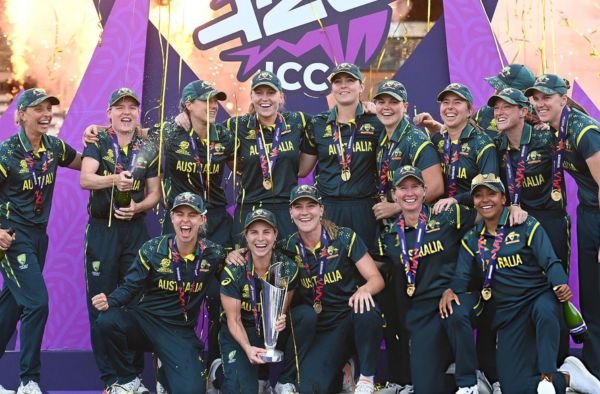
The triumph marked Australia’s return to the summit of world cricket after missing out on the previous two ICC tournaments. It also preserved their remarkable record in Women’s T20 World Cup finals, having now won all seven appearances in the title clash. The victory was another reminder of Australia’s ability to deliver under pressure, particularly on the biggest stage.
England entered the final unbeaten and backed by a capacity home crowd, hoping to win their first Women’s T20 World Cup title since 2009. However, they found themselves outplayed by an Australian side that combined disciplined bowling with fearless batting to once again prove why they remain the most successful team in the tournament’s history.
After Australia won the toss and elected to field, England struggled to establish momentum during the first half of their innings. The Australian pace attack bowled with excellent control, denying the hosts any rhythm inside the powerplay. Lucy Hamilton provided the breakthrough Australia wanted by dismissing Amy Jones early, while Kim Garth and Annabel Sutherland maintained relentless pressure. England’s leading run scorer of the tournament, Danni Wyatt-Hodge, also departed cheaply after Beth Mooney completed an outstanding catch behind the stumps following a successful review.
Captain Nat Sciver-Brunt once again carried England’s batting responsibility. She remained unbeaten on 58, displaying patience and composure despite the regular fall of wickets around her. Alice Capsey briefly injected urgency with an aggressive 23 before falling to Sophie Molineux, while Heather Knight was trapped in front by Garth at a crucial stage. England finally found some momentum through Freya Kemp, whose unbeaten 44 transformed the closing overs.
Her partnership of 80 with Sciver-Brunt lifted England from a difficult position and helped them finish on 150 for 4, giving the home side hope that scoreboard pressure on a used Lord’s surface could create opportunities. Sciver-Brunt’s innings also saw her become the player with the most 50 plus scores in Women’s T20 World Cup history. Australia’s chase began with early drama as Georgia Voll survived an overturned lbw decision before eventually falling to Lauren Bell. England sensed an opening, but what followed effectively settled the contest.
Beth Mooney and Phoebe Litchfield stitched together a magnificent 100 run partnership for the second wicket, dismantling England’s bowling attack with calculated aggression. While Mooney initially took time to settle, she soon found her rhythm by piercing the field with trademark timing and placement. The experienced left hander finished with a composed 64 from 49 deliveries, recording her third consecutive half century in a Women’s T20 World Cup final.
At the other end, Litchfield played one of the finest innings of her young career. Her fluent 48 from 35 balls featured elegant stroke play, innovative sweeps and fearless intent against both pace and spin. Together, the pair ensured Australia raced to 98 for 1 at the halfway stage, leaving England with little room for a comeback. Although Charlie Dean eventually dismissed Litchfield before she could reach a deserved half century, the damage had already been done. Mooney soon departed after completing another match defining innings, but Ellyse Perry and Ashleigh Gardner calmly guided Australia across the finish line.
Australia completed the chase in just 17.1 overs, registering the highest successful run chase in a Women’s T20 World Cup final and underlining the depth and quality that has defined their era of dominance. Mooney was named Player of the Match and also finished as the tournament’s Player of the Tournament after another exceptional campaign.
The result highlighted Australia’s extraordinary consistency on cricket’s biggest stage. Their blend of experienced champions such as Mooney, Perry and Gardner alongside emerging stars like Litchfield signals that the team’s dominance is far from over. For England, despite the disappointment of falling short at home, an unbeaten run to the final and the emergence of players like Kemp offer encouraging signs for the future.
As Lord’s witnessed another memorable world final, Australia once again demonstrated why they remain the gold standard in women’s cricket, extending a legacy that continues to redefine excellence in the international game.

