

Sophie Devine, Suzie Bates, Lea Tahuhu- these are the names you must’ve heard if you know anything about the White Ferns or anything about women’s cricket in general. These three, who more or less shaped women’s cricket in New Zealand, officially retired from international cricket on June 27, 2026, after their final match against England at the ICC Women’s T20 World Cup, a tournament which was below par for New Zealand.
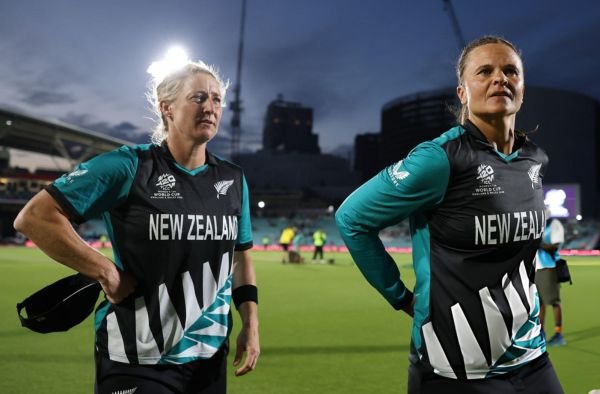
Bates and Devine dedicated 20 years to New Zealand Cricket, while Tahuhu played for 15 years. These figures carry significance, having spent more than 10 years in a country where they never once got the chance to wear the whites of test cricket.
The White Ferns last played a test match in 2004, that is, 22 years ago. Since then, players have come and gone, a new generation of the White Ferns has emerged, and yet a single test was never scheduled. This is a systemic issue—and the problem runs deeper than we see.
In an interview with Suzie Bates on Sky, Devine was asked how she felt about not having played a single Test. “It depends on the day,” she said. “It probably would have been over in a day and a half, but we’d have had a bloody good time. It’s unfortunate that it hasn’t happened in our careers, but maybe one day it will for the other girls in the team. It is so cool to see females playing in that format.”
A part of this problem also happens to be the media. When Bates, Tahuhu, and Devine had initially announced their international retirements after the Women’s T20 World Cup, pieces were written about the impact they had and the legacy they would leave behind, but no one pointed out the sheer injustice about the fact that they never got to play a test match.
To give you a little bit of an idea about how the media hypes up the absolute bare minimum would be the noise surrounding the first-ever women’s test to be held at Lord’s, which was played between England and India. Was it a monumental milestone for the women’s game? Sure, it was. But was it also something that was the bare minimum? Yes, it was, and there were multiple articles celebrating the milestone of playing at Lord’s.
When India did defeat England, media outlets were quick to make grand statements and praise figures like ICC Chairman Jay Shah. But once again we have to ask the uncomfortable question: what does a single, heavily marketed Test Match at the Home of Cricket change for the global women’s game?
And don’t take this negatively; appreciating something historical and questioning the process behind it can co-exist. If the media and the people do not question the higher-ups and keep consuming the bare minimum, is anything going to change?
It is easy for the media to applaud a one-off test between the sport’s wealthiest nations. Celebrating a single Test match in London while entire generations of legends in New Zealand retire with zero Test caps isn’t progress – it is as much of the ICC’s failure as of the New Zealand Cricket Board.
If we were to somehow look past the media’s problem. The problem that is difficult to solve is that the New Zealand Cricket (NZC) cuts tests to save money. In this case, it is not an issue of gender bias; it is a symptom of administrative financial cowardice.
Take their men’s team, for instance; even the Black Caps don’t get enough chances to play despite having some of the best test players. This is not just New Zealand; take Cricket South Africa, for that matter; even they treat red-ball cricket as an unwanted expense. If the boards themselves aren’t ready to take the risk and the funds aren’t available (which is an entirely different topic), women’s test cricket is going to get harmed as collateral.
While the NZC board might not be the wealthiest, we all can agree they’re well-established compared to nations like Ireland or Zimbabwe.
When NZC can’t schedule tests during a span of 20 years when three of their best players were still a part of the teams, what message do you think that leaves for the smaller nations?
That Test cricket is an exclusive club only reserved for the bigger nations?
In April of 2021, Bangladesh, Zimbabwe, and Afghanistan were awarded permanent Test and ODI status amongst other Full Member women’s teams. Answer this: What does a piece of paper prove if no actions are taken to start something or improve something?
Nothing; the answer would be nothing. Just because the ICC decided to hand out the Test status, it doesn’t automatically change the systemic issues. Without mandatory funding and support, it just remains a mere title.
Does that mean that if New Zealand were to schedule a women’s test tomorrow, the likes of Ireland, Zimbabwe, Bangladesh, etc automatically schedule them too? No. But it could set an example.
It is too late for Suzie Bates, Sophie Devine, and Lea Tahuhu, but that does not have to be the case for the future generation. Amelia Kerr, Jess Kerr, Georgia Plimmer, etc do not have to suffer the same fate when it comes to red-ball cricket.
Cheering when England, India, or Australia play a single test isn’t going to change the system. Recognising and acting on the fact that other nations also deserve the same opportunities for Test cricket is going to bring in real change. There is enough money in the global pot— the ICC generates billions in broadcast revenue— but without central mandates or a dedicated fund for women’s multi-day cricket, almost everything is in vain.
And if we’re going to talk about time, there has been more than enough of it. Yes, women’s cricket has started developing in recent times, but there never was a lack of opportunity or timing to upgrade it. The only thing that ever lacked was the willingness to do so.

