

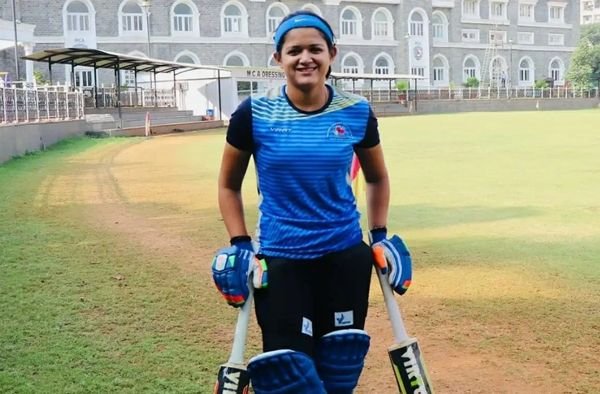
About four days ago, the Mumbai Cricket Association announced their contracts for the 2026-27 season, and a visual that would’ve stood up for everyone was the equal payment for female cricketers. Their Grade A players will earn 12 lakhs, Grade B 8 lakhs, and Grade C 3 lakhs. It’s a great step and a landmark moment for the local governing body and the athletes, because when domestic bodies prove equal retainers are possible to build, it raises the same question for national governing bodies as to where they’re falling short.
It’s not all in black and white; the BCCI and New Zealand cricket do pay their female cricketers equal match fees; however, match fees only compensate the players when they’re actively playing. It provides no security for the off-season, injuries, or rehab.
The BCCI pays ₹15 lakhs per test, ₹6 lakhs per ODI, and ₹3 lakhs per T20I, but their annual contracts reveal a significant disparity. Male cricketers in Grade A receive ₹5 crores, Grade B gets ₹3 crores, while Grade C earns ₹1 crore. In contrast, the women’s central contracts are: Grade A ₹50 lakhs, Grade B ₹30 lakhs, and Grade C ₹10 lakhs. A male cricketer in BCCI’s Grade C still earns more than a female in Grade A, and the comparison between women’s and men’s Grade A remains nonexistent due to the substantial difference in prize money.
Just like the BCCI, even the New Zealand cricket board pays equal match fees, but even their central contracts have a stark difference. While exact numbers aren’t available, it is believed that their men’s base retainer ranges anywhere from NZ$ 165,000 to NZ$ 318,000. The women’s base retainer ranges from NZ$ 80,000 TO NZ$ 100,000.
It’s not about a particular board; it’s a pattern across international cricket that hasn’t quite been solved yet. Under these existing central contracts, comparatively speaking, marquee players are still protected. But what happens to non-marquee players? The ones who are still trying to make a name of their own— how are they guaranteed financial stability during off-seasons, injuries, or long gaps in their international career?
Female cricketers in general, marquee or non-marquee, have to rely on franchise leagues to bridge the income gap, and with the rise of T20 leagues they’re able to do so, yes, but that’s the point, isn’t it? When you aren’t being paid enough by your national board, your reliance on external leagues becomes almost essential.
Equal match fees rightly recognise the athlete’s hard work, but true equality is lacking if your female cricketers earn less than half of what their male counterparts do. If a domestic body like the Mumbai Cricket Association can offer equal fees with fewer resources and a smaller budget than the BCCI or New Zealand Cricket, then the claim that equal retainers are financially unfeasible falls apart. This strengthens their stance even more because, whether it’s the BCCI, ECB, Cricket Australia, or others, it is ultimately about priorities—the priorities these boards are unwilling to dedicate to their female players.

