

Every generation of Indian sports fans has a colour that evokes emotion before a match even begins. For cricket, it is the unmistakable blue that has become synonymous with national pride. For hockey, the story has been no different. The Indian men’s hockey team has carried shades of blue through Olympic triumphs, World Cup campaigns and a resurgence that has restored the country’s standing in the sport. It is a colour that has transcended fashion to become part of Indian sporting identity.
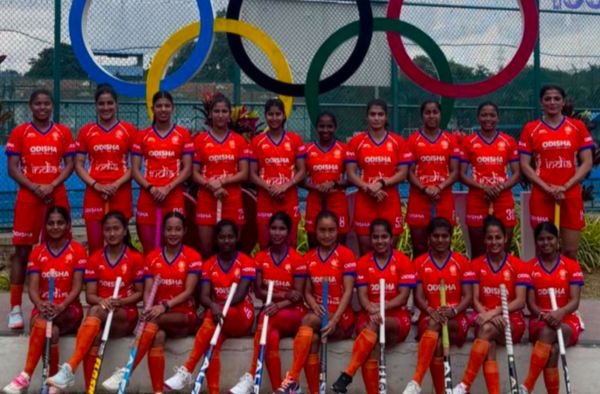
That is why Hockey India’s decision to replace the traditional blue jersey with a saffron kit for the upcoming FIH Hockey World Cup has sparked a debate that stretches well beyond aesthetics. Social media erupted with divided opinions, former players questioned the move, and what could have been a routine kit launch soon transformed into a larger conversation on symbolism, institutional accountability and the role of governance in Indian sport.
Yet, reducing this issue to a debate over colours risks missing the bigger story. The real controversy is not whether saffron is an appropriate colour for the national team. Every sporting nation experiments with alternate kits. Australia has worn green and gold in varying combinations. New Zealand’s famous black jersey has seen multiple adaptations. Football teams around the world regularly unveil alternate colours to mark anniversaries, commercial partnerships or tournament-specific campaigns.
The question is not whether a jersey can change. The question is who gets to decide that change, and whether that decision follows the processes expected of a national sporting federation. That concern became significantly more pronounced when Hockey India president Dilip Tirkey publicly revealed that members of the federation’s Executive Board were informed of the jersey change only a little over two hours before its public unveiling.
Tirkey later sought detailed explanations from Director General Cdr. R.K. Srivastava regarding the authority under which the decision was taken, the consultations conducted, and whether established governance procedures had been followed.
In one of the strongest statements to emerge from the controversy, Tirkey wrote, “Hockey India does not own Indian hockey. We are trustees and custodians of a national sporting legacy.”
Those words shift the debate entirely. They acknowledge that the issue is not simply about replacing blue with saffron. Rather, it is about preserving institutional credibility. National sporting federations exist not merely to administer tournaments but to safeguard traditions, represent stakeholders and ensure that decisions affecting players and national symbols are taken transparently.
Tirkey further clarified this distinction when he stated, “At the outset, I wish to make it clear that the issue under consideration is not merely the colour or design of a jersey. The matter concerns the decision-making process adopted for a change involving one of the most recognisable symbols of Indian hockey, the authority under which such a decision was taken, the consultations undertaken, compliance with Hockey India’s governance framework, and whether appropriate institutional processes were followed.”
That statement deserves greater attention than the colour itself. Sport has always existed alongside national identity. Jerseys are not ordinary pieces of clothing. They become visual representations of history, sacrifice and collective memory. India’s blue jersey has witnessed Olympic medals, Asian Games victories, Commonwealth Games success and the country’s return among the world’s elite hockey nations. Unsurprisingly, any alteration to such an enduring symbol is bound to invite emotional reactions.
However, emotional attachment alone cannot dictate administrative decisions. Sporting bodies must retain the flexibility to evolve their branding and presentation. At the same time, that flexibility must be balanced by consultation, transparency and institutional consensus. Without those safeguards, even well intentioned decisions risk appearing arbitrary.
The timing of the announcement has also drawn criticism. Players found themselves answering questions about the jersey in the days leading up to a major international tournament. Instead of discussions focusing on tactics, preparation and India’s medal ambitions, attention shifted towards administrative decisions.
Recognising this concern, Tirkey asked whether the federation had assessed the impact of the controversy on “athlete’s preparation, confidence, comfort, mental focus and competition readiness.” He also questioned whether forcing players to respond to media queries immediately before the World Cup had been factored into the federation’s planning.
These are not trivial concerns. Elite athletes prepare for years to compete on the biggest stages. Every unnecessary distraction chips away at that preparation. Administrators exist to create stability around athletes, not turbulence. Whether the jersey remains blue, saffron or any other colour should never become a bigger talking point than the team’s performance on the field.
The controversy has also reignited a larger discussion on governance within Indian sport. Over the past decade, Indian federations have increasingly been expected to embrace transparency, athlete representation and stronger institutional accountability. Decisions involving national symbols, commercial partnerships or sporting identity cannot be viewed as routine administrative exercises. They carry emotional, historical and public significance.
Perhaps the most important lesson from this episode is that trust in institutions is built as much through process as through outcomes. Had the Executive Board been consulted, former players informed and athletes involved in discussions, the public conversation might have centred on the design itself rather than the legitimacy of the decision.
The debate surrounding Hockey India’s jersey will eventually fade. The team’s performances at the World Cup will determine how history remembers this tournament far more than the colour they wear. But the questions raised over governance should not disappear with the headlines.
National teams belong to the country they represent, not to any one office bearer, administrator or committee. Their colours may evolve with time, but the principles governing those decisions should remain constant: transparency, accountability and respect for the legacy entrusted to every sporting institution.
In the end, Indian hockey’s greatest strength has never been the colour of its jersey. It has always been the players who wear it. Administrators would do well to remember that preserving their confidence is far more important than changing the colour on their backs.

