

As 16 nations prepare to chase history at the 2026 FIH Hockey Women’s World Cup, the trophy itself carries a story of how far the women’s game has travelled. Before the first whistle is blown, before the penalty corners, shootouts and celebrations, there is one image every team at the FIH Hockey Women’s World Cup is chasing: the moment the winning captain lifts the trophy above her head.
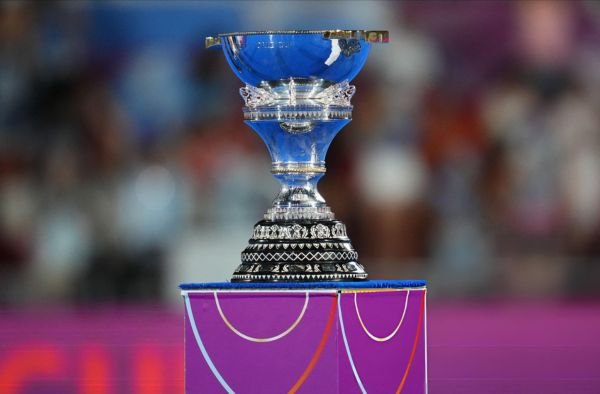
But the women’s World Cup trophy has not always looked like the imposing prize that awaits the champion in 2026. Its journey mirrors the evolution of women’s hockey itself, from a modest silver bowl to a grand piece of silverware designed to stand alongside the sport’s most prestigious trophies. The 2026 World Cup begins on August 15 in Belgium and the Netherlands, with 16 women’s teams competing alongside 16 men’s teams. Matches will be staged at the Wagener Stadium in Amsterdam and the Belfius Hockey Arena in Wavre, with the women’s tournament opening when Australia face Japan in Amsterdam.
For the women’s game, however, the road to that stage began decades earlier. The first women’s World Championship was held in Scotland in 1975, where England defeated Wales in the final. The tournament was organised by the International Federation of Women’s Hockey Associations, before the IFWHA later merged with the FIH. Scotland’s hockey heritage records that England were presented with the Royal Bank of Scotland Quaich after winning the inaugural tournament.
That early silverware eventually became the foundation of the women’s World Cup trophy. For years, the original trophy was affectionately known as the “Salad Bowl”, a reference to its distinctive bowl-like appearance. It stood only 13 centimetres tall, a striking contrast to the imposing trophy that exists today.
Ahead of the 2018 Women’s World Cup in London, the FIH commissioned London-based silversmiths Thomas Lyte to transform the historic trophy. The challenge was not simply to replace it, but to preserve its identity while giving it a stature comparable to the men’s World Cup trophy. The original silver bowl was recreated because the metal had become too thin with age, but its original gold-plated handles were retained. A decorated silver column and a substantial plinth were then added, increasing the trophy’s height by roughly 35 centimetres. The design also incorporated thistle-inspired detailing, maintaining its Scottish connection.
That redesign was more than a change in appearance. It was a statement about the growing stature of the women’s game. The transformation is particularly significant ahead of the 2026 edition, where the women’s and men’s World Cups will be staged simultaneously and at the same venues. FIH has described the combined tournament as a celebration of inclusion and visibility, with both competitions sharing the global spotlight.
The contrast with the men’s trophy is fascinating. The men’s World Cup trophy, created in 1971, is an 11.56kg masterpiece featuring silver, gold, ivory and teak, topped by a globe and a hockey stick and ball. It was designed by Bashir Moojid and created by the Pakistani Army. Thomas Lyte restored it in 2018.
The women’s trophy tells a different story. Its history is less about grandeur from the outset and more about evolution. From a 13-centimetre bowl to a trophy capable of taking centre stage in a modern global sporting spectacle, its transformation reflects the journey of women’s hockey itself. Now, as the Netherlands arrive as reigning champions and 15 challengers prepare to test them, the trophy will once again become the final destination of a month-long battle.
The players will create the next chapter on the turf. And when the final whistle goes on August 30, one captain will get to lift a piece of history that has been evolving alongside the women who have fought to make the World Cup what it is today.

