

India’s junior hockey teams arrive at the AHF Junior Asia Cup 2026 carrying more than the weight of defending their titles. They arrive with the expectation that a carefully constructed preparation cycle, extensive overseas exposure and new coaching leadership can translate into another dominant continental campaign.
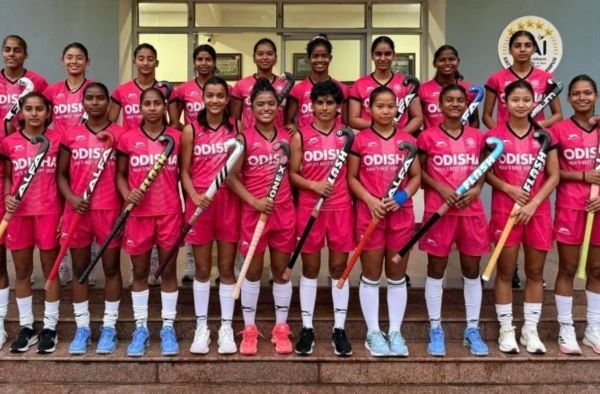
The Indian junior women have won the last two editions of the competition and will be aiming for a hat-trick of titles, while the junior men enter the tournament as five-time champions, having lifted the trophy in each of the last three editions. Both sides begin their campaigns on September 5 in Moqi, with the women facing Korea and the men taking on Indonesia.
For the women’s side, the tournament represents the first major test of coach Tim White’s work since taking charge earlier this year. Captain Khaidem Shileima Chanu will lead a squad that has been given considerable international exposure ahead of the competition. The team’s United Kingdom tour in July featured seven matches against Scotland’s senior women’s team and the U-21 sides of the United States, England and Belgium. India registered notable results, including a 6-0 victory over the USA and consecutive 2-0 wins against England, while also gaining valuable experience against stronger senior opposition.
That exposure has been central to White’s preparations, allowing his players to experience different styles, intensities and tactical demands before confronting Asia’s leading junior teams. “Our first game is against South Korea on Saturday, so we are preparing for that. The team has acclimatised well. The weather is a bit cooler (in Moqi), but conditions are good, and we are really looking forward to Match 1,” said coach White. India have been placed in the women’s Elite Pool alongside Korea, Malaysia, Japan and hosts China. After Korea on September 5, India will meet Malaysia on September 6, Japan on September 8 and China on September 9.
“In terms of our expectations, we prepared well in Bengaluru over some months, including a tour of the UK and some games against a combined team. We feel our game is in good order and we are well prepared to play against the best teams in Asia. We are looking forward to seeing how our game plan is going to stand up against the best teams. I am sure the girls will do India proud,” he added. The men’s team faces a similarly demanding challenge, although the expectations are arguably even higher given its history in the competition.
Defender Anmol Ekka has been named captain, while Frederic Soyez begins his tenure as coach with the opportunity to immediately deliver silverware. India prepared in Belgium earlier this year, playing six matches against Austria, Belgium, Germany and the Netherlands.
The team subsequently played Malaysia in Bengaluru before travelling to Dalian, where it played three matches against China as part of its final preparations. India ended that series with an emphatic 8-2 victory, giving Soyez and his players a timely confidence boost before the tournament.
“Our progression has been quite good. The last (friendly) game against China (an 8-2 win for India) was very positive,” said coach Soyez. “It gave our confidence a huge boost heading into the tournament. We spent one week in Dalian, getting used to the conditions in China, before arriving in Moqi ahead of our opening match against Indonesia on Saturday.” India’s men’s Pool A campaign will then continue against Japan on September 6, Korea on September 8 and Chinese Taipei on September 9.
For Soyez, however, the tournament is about more than defending India’s crown. “Our main expectation from this tournament is to keep progressing and become more confident and consistent, maintain a solid defensive structure and raise our level of performance with every match,” Soyez added. India’s preparation has been comprehensive, but preparation alone does not win junior tournaments. The exposure tours in Europe and the UK have given both squads something domestic training cannot replicate: repeated encounters with unfamiliar opponents and different tactical approaches. The crucial question in Moqi is whether that experience has produced teams capable of adapting when matches become tight and the margin for error disappears.
For the women, the challenge is to complete a hat-trick and prove that the success of the previous two editions was not a cycle but the beginning of sustained dominance. For the men, the target is even more historic: a record-extending sixth Junior Asia Cup title. The significance extends beyond the trophies. The tournament is one of the most important stepping stones for India’s next generation, providing players with high-level continental experience before they make the transition towards senior international hockey. With both teams entering as defending champions, India have already established the benchmark.

