

The United States arrive in Berlin with history on their side, but this time the challenge comes with a different feel. The reigning champions are chasing a fifth consecutive FIBA Women’s Basketball World Cup title, while the tournament itself enters a new era with an expanded 16-team field and a collection of young stars ready to challenge the established order.
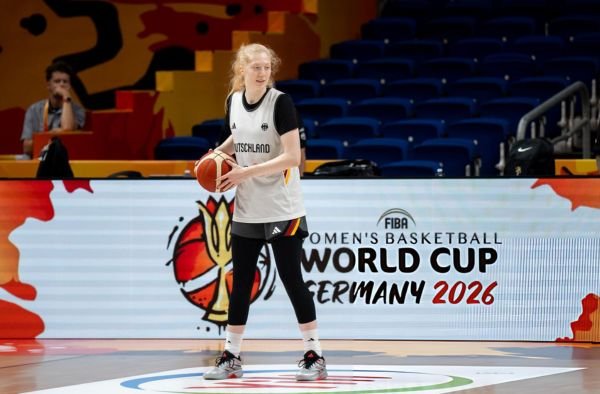
The 20th edition of the Women’s Basketball World Cup begins on September 4 and runs until September 13 in Berlin, with matches being played at the Berlin Arena and Max-Schmeling-Halle. The expansion from 12 to 16 teams reflects the growing strength and popularity of the women’s international game.
For the USA, however, the objective remains familiar: gold.The Americans have dominated the competition for decades and are entering the tournament as the world’s No. 1 ranked side. Their opening Group D fixture comes against China on September 4, followed by Italy on September 6 and Czechia on September 7.
Yet this USA squad carries a fascinating blend of experience and first-time World Cup talent. Caitlin Clark and Paige Bueckers are set to make their World Cup debuts, while Angel Reese is also part of the roster. Alongside them are established stars such as Breanna Stewart, Chelsea Gray, Napheesa Collier, Jackie Young and Kahleah Copper.
The squad has undergone a late change, with Sonia Citron and Kiki Iriafen replacing A’ja Wilson and Kelsey Plum, who withdrew because of health issues. Despite those absences, FIBA notes that the USA still possess extraordinary depth, with nine World Cup debutantes and a group carrying a combined haul of 10 Olympic and five World Cup medals.
That depth could prove crucial during a tournament compressed into just 10 days. The format gives every game added significance. The four group winners progress directly to the quarter-finals, while teams finishing second and third must navigate a single-elimination qualification game.
From there, the quarter-finals, semi-finals and final are all knockout contests. The USA’s Group D is particularly intriguing. China are ranked fourth in the world and could provide the Americans with an immediate examination, while Italy and Czechia will be determined to disrupt the expected order.
But the threat to American dominance extends beyond Group D. Group C features world No. 3 Australia and defending European champions Belgium, while Group B contains France, ranked second in the world, alongside Nigeria, Korea and Hungary. Group A brings together Spain, Japan, hosts Germany and Mali.
Australia arrive with six players who have WNBA experience, while France also boast several familiar names from the American league. Belgium’s Emma Meesseman adds another major international star to a field that is increasingly bridging the gap between domestic professional leagues and national-team basketball.
The USA are favourites, but the tournament is bigger than their title defence. The most compelling storyline in Berlin may not be whether the USA can win another gold medal. It is whether the rest of the world can close the gap. American dominance remains undeniable. FIBA notes that the USA have not lost a World Cup game since their defeat to Russia in 2006, while their recent Olympic record has been similarly formidable.
But international women’s basketball is no longer built around a single power. Australia, France, Belgium, Spain, China and Japan all arrive with experienced cores and increasingly sophisticated systems. The presence of WNBA players across multiple nations is another indication of how international talent is shaping elite women’s basketball.
For Clark and Bueckers, meanwhile, Berlin represents the beginning of a new chapter. Both have already tasted international success at youth level, but the senior World Cup presents an entirely different examination. The schedule leaves little room for adjustment. The group phase runs from September 4 to 7, qualification games follow on September 8 and 9, the quarter-finals begin September 10, and the semi-finals and medal games arrive within three days.
The stage is therefore set for a tournament where reputations will matter, but execution will matter more. The USA have arrived chasing history. The rest of the world arrives believing that history can finally be rewritten.

