

Lists are often designed to spark debate. But every so often, they become a reflection of something much larger than personal preference. When former United States President Barack Obama revealed his “Mount Rushmore” of women’s sports, naming Serena Williams, Simone Biles, Katie Ledecky and Cheryl Miller as his four greatest female athletes, he was doing more than celebrating sporting excellence. He was acknowledging a cultural shift. Women’s sports are no longer fighting for recognition. They are defining the sporting conversation.
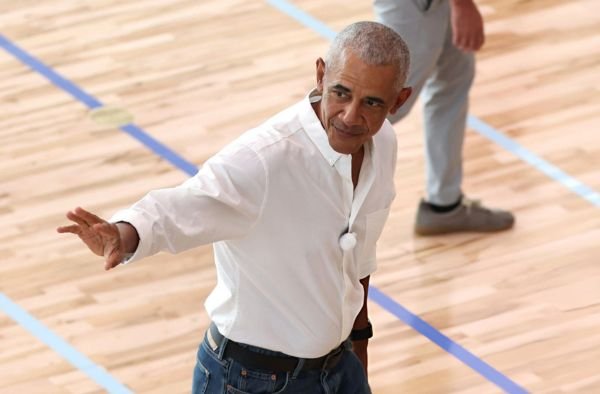
The idea of a “Mount Rushmore” has long been associated with selecting the four most influential figures in any field. While fans will inevitably argue over omissions and alternatives, Obama’s selections represent athletes who did not simply dominate their sports. They transformed them.
At the centre of his list is Serena Williams, whose impact extends well beyond her 23 Grand Slam singles titles and four Olympic gold medals. Williams redefined power, longevity and resilience in tennis while becoming one of the most influential athletes in modern history. Her legacy has inspired an entirely new generation of women to believe that dominance and femininity can comfortably coexist.
Joining her is Simone Biles, widely regarded as the greatest gymnast the sport has ever seen. With seven Olympic gold medals and a record-breaking collection of World Championship titles, Biles has consistently pushed gymnastics into uncharted territory. Yet her greatest contribution may have come away from competition. By prioritising her mental health during the Tokyo Olympics, she changed how elite sport views athlete wellbeing, proving that strength is measured not only by medals but also by the courage to step back when necessary.
Obama was unequivocal in his praise. “nobody can really dispute” her greatest of all time (GOAT) status. Katie Ledecky’s inclusion is equally significant. Swimming has witnessed many champions, but few have sustained excellence with such remarkable consistency. The American distance swimmer has amassed 14 Olympic medals, including nine golds, and owns numerous world records across freestyle events. Her dominance has spanned more than a decade, making her one of the most successful Olympians in history.
Obama acknowledged that her achievements are often overlooked. “People are sleeping on her…when you look at the records she has racked up.” The fourth name on the list, Cheryl Miller, perhaps says the most about Obama’s appreciation of sporting history. Long before the WNBA existed, Miller was redefining women’s basketball. A two-time NCAA champion at USC and Olympic gold medallist at the 1984 Los Angeles Games, she became one of the sport’s foundational figures despite never having the opportunity to play professionally in a league comparable to today’s WNBA. Her influence paved the way for generations of athletes who followed.
Together, these four women represent excellence across four different sports, but they also tell the story of how women’s athletics has evolved over the past four decades.
The timing of Obama’s list is particularly meaningful. Women’s sports are experiencing unprecedented commercial growth. According to Deloitte, global revenues from elite women’s sports are expected to exceed $2.35 billion, driven by increased media rights, sponsorships and fan engagement. Sports that were once considered niche now attract sold-out arenas, record television audiences and major corporate investment.
The conversation surrounding female athletes has also changed. Success is no longer measured solely by medals or championships. Athletes today influence social movements, reshape conversations around equality and mental health, and inspire millions beyond the boundaries of sport. Serena Williams challenged stereotypes in tennis. Simone Biles normalised discussions around athlete welfare. Katie Ledecky redefined sustained excellence in Olympic competition. Cheryl Miller laid the foundations for professional women’s basketball before the infrastructure even existed.
Perhaps that is why Obama’s list resonates beyond American sport. It recognises that greatness is not simply about statistics. It is about changing what future generations believe is possible. There will always be debates about who belongs on any sporting Mount Rushmore. Billie Jean King, Mia Hamm, Marta, Steffi Graf and countless others all have compelling cases. That is the beauty of such conversations.
What is no longer debatable, however, is the place women’s sports occupy in the global sporting landscape. Once treated as an afterthought, they are now commanding headlines, attracting investment and producing icons whose influence rivals any athlete in history.
Obama’s four selections may be carved only into conversation rather than stone, but together they represent something enduring. They are not merely four extraordinary champions. They are four athletes who helped ensure that women’s sport would never again have to ask for a seat at the table.

