

For years, Indian table tennis has lived in the shadow of bigger Olympic sports. Cricket dominates headlines, badminton produces global superstars and wrestling and boxing often command attention during multi-sport events. Yet, quietly and consistently, Indian women have been building a table tennis culture capable of competing with the best in the Commonwealth. Their latest triumph at the 22nd Commonwealth Table Tennis Championships is another reminder that this success is no longer occasional. It is becoming a habit.
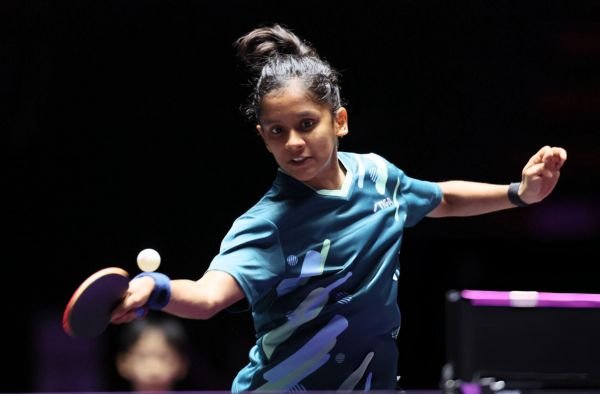
India’s women clinched the Commonwealth team title with an emphatic 3-0 victory over Malaysia at New Delhi’s Thyagaraj Stadium. While the men’s final went down to the wire before India edged Malaysia 3-2, the women left little room for doubt. Their performance was composed, confident and reflective of a team that has developed both quality and depth.
The victory may not command the same attention as an Olympic medal, but it carries considerable significance. Malaysia has traditionally been one of the stronger table tennis nations in the Commonwealth, making India’s dominance in the final an indicator of how far the women’s programme has evolved.
Swastika Ghosh set the tone for the contest. Although she surrendered a game after taking a commanding lead, she showed maturity under pressure to regain control and hand India the opening point. The performance highlighted an increasingly important quality among India’s younger paddlers: resilience.
Sreeja Akula followed with a hard-fought win. Despite allowing Malaysia’s Karen Lyne Anak Dick to level the contest after leading, Sreeja responded strongly in the deciding game to extend India’s advantage. Yashaswini Ghorpade then completed the clean sweep, recovering from the loss of the opening game before defeating Alice Lee Sian Chang in four games. Her dramatic 17-15 victory in the third game proved to be the turning point before she comfortably closed out the match.
The scoreline suggests a straightforward victory, but the individual matches revealed something more valuable than technical superiority. They demonstrated composure under pressure, an attribute that often separates champions from contenders.
This success did not emerge overnight. Indian women’s table tennis has steadily risen over the past decade through sustained investment, improved coaching and increased international exposure. Players like Manika Batra helped transform the sport’s visibility by becoming the first Indian woman to win a Commonwealth Games singles gold medal in 2018. More recently, Sreeja Akula created history by becoming the first Indian paddler to win a WTT Contender singles title when she triumphed in Lagos in 2024, signalling India’s growing presence beyond the Commonwealth circuit.
The current squad reflects that expanding pipeline. While experienced names continue to deliver, younger players such as Swastika Ghosh and Yashaswini Ghorpade are proving capable of stepping onto the biggest stages without intimidation. Healthy competition within the national setup is creating a stronger bench, something every successful sporting nation requires.
The timing could hardly be more important. With the Commonwealth Games becoming increasingly competitive and Asian rivals continuing to dominate world table tennis, India needs greater squad depth rather than dependence on individual stars. Team events reward consistency across multiple players, and this championship demonstrated that India possesses exactly that.
Women’s sport in India has often been driven by breakthrough individuals. From P. V. Sindhu and Mirabai Chanu to Nikhat Zareen and Lovlina Borgohain, iconic athletes have inspired millions while carrying enormous expectations. Table tennis appears to be taking a different path. Instead of relying on one superstar, India is cultivating an ecosystem where several players are capable of delivering match-winning performances. That may ultimately prove to be a more sustainable model.
The men deserve immense credit for reclaiming the Commonwealth title after overcoming a spirited Malaysian challenge, with Manush Shah producing a heroic performance in the decisive fifth rubber. Yet the women’s victory arguably offers the more compelling story. It was not built on dramatic comebacks or last-match heroics. It was built on collective excellence.
Championships are often remembered for the medals won. Legacies, however, are built through consistency. India’s women are beginning to establish exactly that. Their commanding triumph over Malaysia is another chapter in a journey that has steadily gathered momentum over the years.
As Indian sport increasingly celebrates its female athletes, the country’s table tennis players are making a strong case for greater recognition. Their latest Commonwealth title is more than another gold medal. It is evidence that Indian women’s table tennis is no longer chasing relevance. It is quietly becoming one of the nation’s most dependable success stories.

