

Suchika Tariyal returned to India with a historic bronze medal around her neck, but the 36-year-old MMA fighter was still left wondering what might have been.
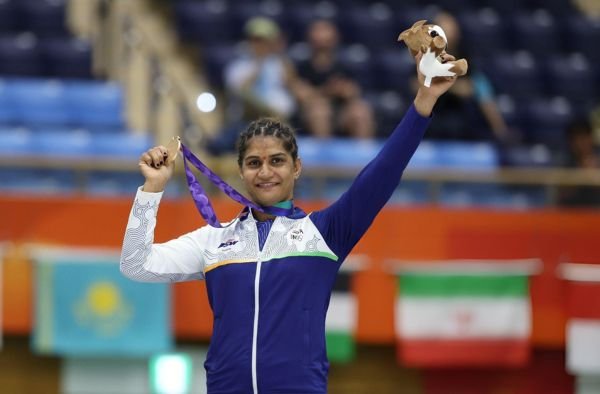
India’s first Asian Games medallist in mixed martial arts believes a controversial weight-based tiebreak denied her a genuine opportunity to fight for gold at the Aichi-Nagoya Games. Suchika’s campaign ended in the women’s traditional 60kg semifinal against Singapore’s Hui Hoon Teo after the bout was eventually declared a draw. The Indian team had challenged the original decision, following which the result was reviewed. The rules were then applied to break the deadlock, with Teo progressing because she was approximately 700 grams lighter than Suchika.
The decision brought an unusual end to a fiercely contested semifinal and left Suchika with India’s first-ever Asian Games medal in MMA, a landmark achievement for a sport making its debut at the continental Games. “I was clearly winning the bout, but it was declared a draw very strangely. Instead of (having) one more round, they applied these weird weight rules which virtually robbed me of my deserving gold medal,” Suchika said on her arrival at the IGI Airport on Thursday. “Regarding the weight rule, I felt it was a very bad rule. They could have let me play one more round. Even if I had lost that round, I could have accepted it, but I could not accept what happened,” she said.
The controversy centred on the competition’s tie-break mechanism. Reports from the bout state that after the contest remained level following the extra round and the judging review, officials moved through the prescribed tie-break criteria. With the fighters still inseparable through the earlier criteria, their pre-competition weights were compared. Teo’s lower weight ultimately gave her the advantage.
The Indian fighter, however, insists the final outcome did not reflect the way she felt the contest had unfolded. “I am very happy to get a medal. The way I was playing, it looked like I would win the gold medal. I know how I reached that stage. I worked very hard, and I couldn’t lose like that. As far as I know, I was winning both the bouts,” Suchika said. “Even in the one-minute round, I was dominating her. She was running backwards, and I was on top of her. I had told you that the federation is from Singapore, so maybe they had to make her win,” she added.
“Maybe they had already made a commitment internationally and could not go back on their word.” Suchika’s comments about the Singapore federation and an alleged prior commitment are her claims, and there is no independent evidence presented in the available reports establishing that such a commitment existed.
The Indian side had challenged the original decision after the semifinal, paying a protest fee for the result to be reviewed. Following examination of the footage, the contest was changed to a draw, but the subsequent application of the weight tiebreak still sent Teo into the final. “When I raised the issue with the federation, the match was declared a draw. They said both of us were equal, but then they gave her the win. I could have been given the win as well,” the Indian said.
“I do not know why they did that. I am not saying it was cheating. If you are declaring the match a draw, you could have given me the win too. What was my shortcoming that you gave her the win? That is all I want to say.” She continued, “You can call it bad luck. I am not saying that I was defeated because of cheating. I am very happy; I cannot express it.”
The medal itself remains a major milestone. MMA was introduced to the Asian Games programme at Aichi-Nagoya in a modified competition format designed with greater emphasis on safety and sporting regulation. The format differs from the MMA commonly associated with professional promotions, with restrictions on certain techniques and equipment requirements. Reuters reported that the event’s organisers are also looking towards broader recognition of the sport, including its potential Olympic future. Suchika had reached the semifinal after defeating Mongolia’s Altanchimeg Baigalmaa in the quarterfinals, assuring India of its maiden MMA medal at the Asian Games.
“Still, I am happy that I have won a bronze medal because it is more precious to me than my life. I have worked extremely hard for it,” she said. For the veteran fighter, the journey does not end in Nagoya. With MMA not currently part of the Olympic programme, Suchika is already looking beyond the Asian Games and towards the next international challenge. “There is the World Championship, and I will prepare for that. I have more fights coming up, so I will fight there as well,” Suchika said. “MMA can also potentially be part of the Olympics. It is not there at the moment, but it could be included in the future. I will continue with my preparation,” she added.
Suchika Tariyal’s bronze medal carries two contrasting stories. One is historic: at 36, she has become India’s first Asian Games medallist in MMA and has put the country on the sport’s continental map. The other is unfinished, with the fighter convinced that a rulebook decision rather than a decisive sporting outcome ended her gold-medal pursuit. The weight tiebreak itself was not an improvised decision. Reports indicate that it formed part of the competition rules for resolving a drawn bout after the relevant judging criteria and overtime had failed to separate the athletes. That distinction matters. Suchika has herself stopped short of calling the outcome cheating, while questioning whether a further round would have provided a more satisfying sporting conclusion.
Her bronze therefore becomes more than a first for Indian MMA. It is also a reminder that emerging sports bring their own competitive frameworks, some of which may feel unfamiliar to athletes and audiences accustomed to other combat disciplines. Suchika leaves the Asian Games without the gold she believed was within reach, but with something India had never won before. And if her next target is the World Championship, the frustration of Nagoya may become another chapter in a career that has already crossed multiple combat sports and now sits at the beginning of India’s MMA history.

