

There was a time when mixed doubles occupied the margins of Grand Slam tennis. Played in front of modest crowds, often overlooked by broadcasters and viewed as an afterthought between marquee singles matches, it rarely generated headlines beyond the tennis faithful. The US Open has decided to change that. Whether one sees it as innovation or commercialisation, one thing is undeniable. The tournament has turned mixed doubles into one of the most talked about events of the tennis calendar.
When the revamped mixed doubles competition returns to Flushing Meadows on 25 August, the draw will feature some of the biggest stars in world tennis. Novak Djokovic is set to partner world No. 1 Aryna Sabalenka. Jack Draper will reunite with Jessica Pegula after their run to the semi-finals last year. Iga Swiatek and Casper Ruud, runners-up in the inaugural edition of the new format, are back together, while Naomi Osaka and Kei Nishikori, Taylor Fritz and Elena Rybakina, and Mirra Andreeva and Andrey Rublev have also registered as teams. The line-up resembles the latter stages of a Grand Slam singles event rather than a mixed doubles competition.
The United States Tennis Association took a calculated gamble when it reimagined the mixed doubles tournament in 2025. Instead of running alongside the traditional singles draw, it shifted the event to the week before the main championship, condensed the schedule into two days, introduced shorter scoring formats in the early rounds and significantly increased the prize money. The champions now receive a prize of $1 million, a dramatic increase from previous editions. The objective was simple. Turn a niche competition into a television spectacle.
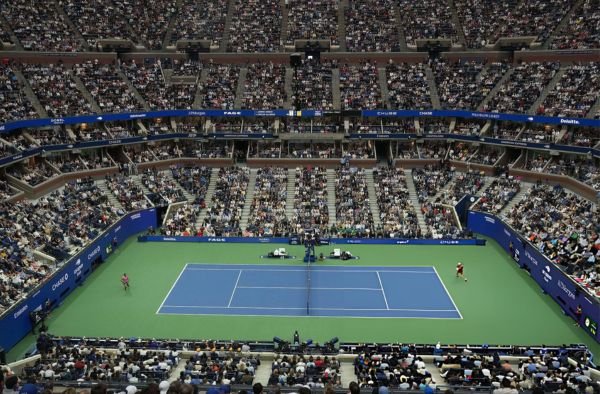
The strategy appears to be working. Reports indicate that organisers have also offered substantial appearance fees, reportedly worth up to $500,000 per player, to encourage the world’s biggest names to participate. Ticket demand has been strong, with Arthur Ashe Stadium expected to draw crowds more commonly associated with singles finals than mixed doubles matches. For the US Open, the event has become both a commercial success and a valuable addition to the tournament’s opening week, attracting fans before the singles competition begins.
The star-studded entry list also carries another significance. In recent months, leading players have publicly voiced concerns over revenue distribution within the Grand Slam ecosystem. Several top stars have supported collective efforts seeking a greater share of tournament revenues. There had even been speculation that some elite players might boycott the revamped mixed doubles event as part of those wider discussions.
Instead, many of the sport’s biggest names, including Sabalenka, Swiatek and Pegula, have entered the competition. Their participation suggests that while disagreements over tennis’ financial structure continue, players remain willing to compete in events that offer competitive incentives, financial rewards and worldwide visibility. It also reflects the delicate balance modern tennis players must strike between advocating for structural change and protecting their own competitive schedules.
Not everyone, however, will be present. Carlos Alcaraz has opted out as he continues recovering from a wrist injury sustained earlier this season. Jannik Sinner, fresh from winning his fifth Grand Slam title at Wimbledon, has also withdrawn, choosing to prioritise his physical recovery after skipping the Canadian Open. Serena Williams, whose emotional return to Wimbledon last month ended with a knee injury, has not yet been included among the confirmed entries, although the entry process remains open until mid August and wildcard selections are still to come.
While the tournament celebrates the arrival of superstar partnerships, criticism from within the doubles community has not disappeared. When the US Open first announced the changes, many specialist doubles players argued that the event had sacrificed competitive integrity for entertainment value. The reduced number of direct entries available to doubles specialists and the emphasis on celebrity partnerships left many questioning whether the tournament still represented the discipline itself.
Italian pair Sara Errani and Andrea Vavassori became the symbolic voices of that resistance. In a strongly worded joint statement before last year’s event, they described the overhaul as a “profoundly wrong” decision that undermined dedicated doubles professionals.
Ironically, they responded in the most convincing way possible. Errani and Vavassori defeated the star-studded field to win the inaugural edition of the revamped tournament, proving that doubles expertise could still overcome individual brilliance. Their victory carried significance beyond the trophy. It reminded tennis that chemistry, tactical understanding and years of doubles experience remain qualities that cannot simply be assembled through star power.
This year’s field once again includes the defending champions, alongside British world doubles No. 1 Henry Patten and Czech doubles legend Katerina Siniakova, ensuring that specialist doubles players continue to have an opportunity to demonstrate their value. The broader debate surrounding the event reflects a familiar challenge across modern sport.
Every major sporting competition is searching for new audiences, increased broadcast revenue and stronger commercial returns. Tennis is no exception. Formula One has embraced documentary storytelling, cricket has expanded franchise leagues and golf continues to experiment with new formats. The US Open’s mixed doubles reinvention belongs to that same movement, where entertainment increasingly shapes sporting decisions.
The question is whether innovation should come at the expense of tradition. Purists argue that Grand Slam events should reward the best doubles partnerships rather than the biggest individual names. Others believe attracting elite singles players creates greater exposure for doubles as a discipline, ultimately benefiting the sport through higher viewership, sponsorship and investment.
Perhaps both arguments contain some truth. The revamped mixed doubles tournament has undeniably transformed public interest. It has generated headlines months before the first serve, encouraged fans to imagine dream partnerships and created a fresh spectacle in a crowded sporting calendar. Yet its long term success will ultimately depend on whether it continues to balance commercial ambition with competitive credibility.
If this year’s tournament delivers compelling matches while allowing specialist doubles teams to compete meaningfully alongside the sport’s biggest stars, the US Open may well have created a blueprint for the future.
If not, it risks becoming little more than an exhibition disguised as a Grand Slam event. Either way, the conversation itself represents a victory. Mixed doubles, once overlooked and underappreciated, has become one of the most debated events in world tennis. In today’s sporting landscape, where attention is often as valuable as trophies, that may be the US Open’s greatest achievement.

