
Ukraine has formally called on the International Olympic Committee (IOC) to re-evaluate the eligibility of certain Russian athletes competing under a neutral banner, citing fresh evidence that allegedly contradicts the conditions set for their participation.
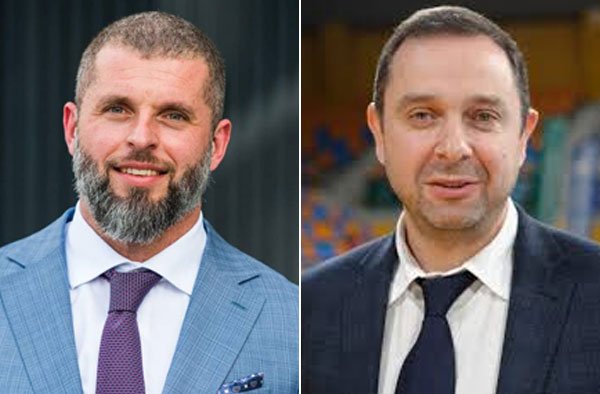
In an official appeal submitted on Wednesday, Ukrainian sports authorities raised concerns over what they describe as violations of neutrality guidelines established in 2023. The request was jointly signed by Ukraine’s Sports Minister Matvii Bidny and Vadym Guttsait, who currently heads the National Olympic Committee of Ukraine.
The appeal comes at a time when global sporting bodies continue to navigate the complex issue of athlete participation following Russia’s 2022 invasion of Ukraine. While the IOC permitted a limited number of athletes from Russia and Belarus to compete at the 2024 Paris Olympics and the 2026 Milan Winter Games, it did so under strict conditions. These included competing without national symbols such as flags or anthems and adhering to a neutrality framework that barred athletes with military affiliations or those who had publicly supported the invasion.
However, Ukrainian officials now claim that some athletes have breached these conditions. “The Ukrainian side has provided evidence of direct links between a number of athletes and the military structures of the aggressor state,” the statement said.
According to the appeal, Ukrainian authorities have gathered documentation suggesting that certain athletes either maintain connections with military institutions, have expressed support for the war, or have trained in Crimea, a region annexed by Russia in 2014 but internationally recognized as part of Ukraine.
The appeal further highlights concerns within sports climbing, specifically pointing to alleged “systematic violations” involving the sport’s governing body, the International Federation of Sport Climbing. Ukrainian officials argue that oversight failures in this discipline raise broader questions about the enforcement of IOC guidelines across international federations.
Another key issue raised involves an international competition reportedly held in Moscow last November under the auspices of the International Military Sports Council. Ukrainian authorities argue that the event violated IOC recommendations and demonstrated ongoing involvement of military-linked sporting structures.
“This confirms the involvement of Russian military structures in the international sports movement with the aim of legitimising Russia’s aggressive policy,” the appeal said. Ukraine has urged both the IOC and the IFSC to take immediate action. “The Ukrainian side calls on the leadership of the IOC and the IFSC to conduct a comprehensive review of these facts and to suspend the individuals in question from international competitions.”
The issue of Russian and Belarusian participation has remained deeply divisive within the global sports community. While some federations have maintained strict restrictions, others have gradually eased them. Notably, the International Paralympic Committee recently allowed athletes from both countries to compete at events in Italy with national flags and anthems, a decision that drew criticism from Ukraine and several allied nations.
For Ukraine, the matter extends beyond sport, reflecting broader geopolitical tensions and the role of international platforms in shaping global narratives. Kyiv has consistently argued that allowing athletes with any ties to state or military institutions undermines the principle of neutrality and risks legitimizing ongoing aggression.
As the sporting world prepares for upcoming Olympic cycles, the IOC now faces renewed scrutiny over its vetting processes and the balance between inclusivity and accountability. Whether this latest appeal leads to disciplinary action or policy revisions remains to be seen, but it underscores the continuing intersection of sport and international politics in a deeply polarized global landscape.

