

For a country that walked away from the 2026 Commonwealth Games with its head held high, it is often the races that end without a medal that deserve the most attention. Championships are not only about podium finishes. They are also about exposing weaknesses before they become costly. India’s mixed 4x400m relay performance in Glasgow may not have dramatically affected the final medal tally, but it has exposed a problem that could carry far greater consequences when the Asian Games arrive.
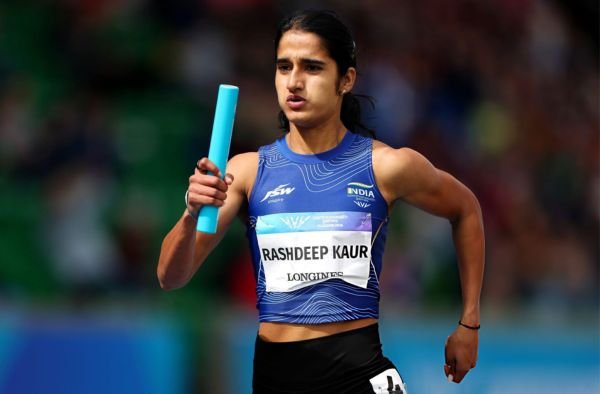
Indian athletics has every reason to celebrate its Commonwealth campaign. The track and field contingent delivered a healthy haul of medals, while several athletes overcame logistical challenges, including the absence of personal coaches, to produce career-best performances. The broader story was one of resilience, depth and growing confidence. Yet amid those positives, the relay team stood out for all the wrong reasons. Their disappointing display has prompted concern within the athletics fraternity because relay events are often viewed as the ultimate measure of a nation’s collective strength rather than individual brilliance.
Unlike an individual race, relays demand far more than raw speed. Baton exchanges, lane discipline, tactical positioning and chemistry built over months of training frequently determine the outcome. Nations such as Australia, Great Britain and Canada have consistently demonstrated that relay medals are earned through precision as much as pace. Australia’s gold medal winning men’s 4x100m relay at these Games was built on flawless baton exchanges that allowed them to edge Olympic champions Canada despite minimal differences in sprinting ability.
India, on the other hand, once again looked like a team searching for rhythm instead of executing a rehearsed plan. The relay lacked the smooth transitions and confidence that separate elite relay squads from competitive runners assembled shortly before a championship. That difference becomes magnified in international finals where fractions of a second determine medal positions.
The irony is that Indian relay teams have shown enormous promise in recent years. The mixed relay squad rewrote the national record in 2024, clocking 3:12.87, while the country’s relay programme has steadily expanded with greater participation across national competitions.
Earlier this year, India also produced a national record in the mixed 4x100m relay at the World Relays in Botswana, highlighting the depth emerging across sprint events. At the Asian Under-23 Championships, another young Indian relay team produced a dramatic gold medal winning performance, underlining the talent waiting in the pipeline.
The question, therefore, is not whether India possesses fast runners. It is whether the system is capable of consistently transforming individual speed into collective success.
That distinction matters because relay success is built over years rather than weeks. Countries that dominate these events identify combinations early, maintain continuity and train almost exclusively around baton efficiency and race strategy. India has often rotated athletes based on individual form, leaving limited time to develop trust and synchronisation. The result is a relay squad that frequently appears to be racing together for the first time.
The disappointment is particularly significant with the Asian Games now on the horizon. While the Commonwealth Games generally feature stronger sprinting nations, including Jamaica, England and Australia, the Asian Games present a more open field.
Several Indian athletes have previously pointed out that winning medals in Asian competition is often more achievable because the overall depth in the 400m events is comparatively lower than at the Commonwealth level. That makes the Glasgow setback less of a verdict on India’s capabilities and more of a warning that opportunities can still be squandered through poor execution.
There is another layer to this conversation. India is increasingly positioning itself as a future global sporting power, backed by stronger grassroots programmes, improved sports science and ambitions of hosting major multi-sport events. The country’s athletics ecosystem has undoubtedly evolved.
Medal winning performances across throwing events, jumping disciplines and middle distance races suggest that India’s dependence on a handful of stars is gradually reducing. The emergence of young athletes through programmes like Khelo India and consistent exposure to international competitions reflects meaningful structural progress.
However, relay events demand institutional excellence. They test planning, coordination, coaching and long-term preparation. A relay team cannot simply rely on one exceptional athlete to rescue the race. Every runner, every exchange and every decision must function seamlessly. That makes relay performances an honest reflection of the health of a sporting system.
The solution is neither complicated nor immediate. India needs stable relay combinations, dedicated relay camps, greater emphasis on baton exchanges during domestic competitions and a commitment to treating relay squads as specialised units instead of temporary assemblies. The talent already exists. What remains missing is sustained continuity.
One poor race should not overshadow an encouraging Commonwealth Games campaign. India’s athletics programme continues to move in the right direction, and the medal tally proves that. But championships are also opportunities to identify vulnerabilities before bigger stages arrive.
The mixed relay disappointment should not be remembered as a failed race. It should be remembered as a timely reminder. If India wishes to convert its growing athletic depth into sustained continental dominance and eventually challenge the world’s best, relay events can no longer remain an afterthought. They must become a priority.
Because when the Asian Games begin, speed alone will not decide whether India stands on the podium but preparation will.

