

As the FIH Hockey Women’s World Cup returns to Europe, the Netherlands arrive chasing a historic 10th crown. But beneath their extraordinary dominance lies a bigger story: how women’s hockey has grown from a tournament of pioneers into one of the most competitive global stages in sport. There is a familiar feeling around the FIH Hockey Women’s World Cup. The names change, generations move on and challengers emerge, but the Netherlands keep finding their way back to the top.
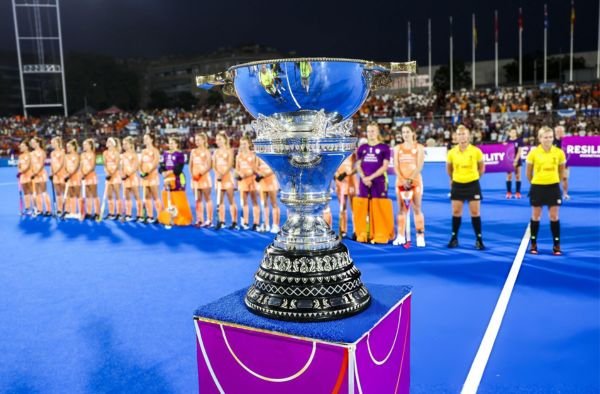
Nine titles in 15 editions. Three consecutive championships. A first World Cup crown in 1974 and a ninth in 2022. If the history of the women’s tournament is a book, the Netherlands have written most of its defining chapters. Yet that is precisely why the 2026 edition feels significant. When the World Cup begins in Belgium and the Netherlands on August 15, the Dutch will not simply be defending a title. They will be attempting to extend one of the most remarkable dynasties in international team sport. The bigger question, however, is whether someone can finally interrupt it.
The women’s World Cup has come a long way since its inaugural edition in Mandelieu, France, in 1974. Ten nations participated in that first tournament, with the Netherlands defeating Argentina 1-0 in the final. The tournament has since evolved into a 16-team global event, with the 2026 edition being staged simultaneously with the men’s World Cup. That evolution is important because the history of the competition cannot simply be reduced to the Netherlands’ trophy cabinet.
Argentina, Australia and Germany have each won the title twice. Argentina’s victories in 2002 and 2010, Australia’s triumphs in 1994 and 1998, and West Germany’s championships in 1976 and 1981 demonstrate that the Dutch have had serious challengers across different eras. But none have been able to sustain dominance on the scale of the Oranje. The numbers are extraordinary. According to the FIH’s official archive, the Netherlands have won nine World Cups, played 102 matches and won 85 of them, giving them an 83.33 per cent winning percentage across the tournament’s history. That is not merely historical superiority. It is a culture of winning.
The most recent example came in 2022, when the Netherlands defeated Argentina 3-1 in the final in Terrassa. It was their ninth World Cup title, with several members of that side, including Eva de Goede, Xan de Waard, Marloes Keetels, Margot van Geffen and Lidewij Welten, collecting their third World Cup gold medal. But the challenge to Dutch supremacy is becoming increasingly credible. Argentina remain one of the tournament’s great powers and reached the 2022 final. Australia, two-time champions, remain perennial contenders. Germany arrive with a two-title history and the experience of reaching the 2025 EuroHockey Championship final. The FIH has also identified Germany as one of the consistent forces of the women’s game, with the side ranked fifth in the world ahead of the tournament.
Then there is Belgium, the host nation and an increasingly important force in women’s hockey. The 2026 tournament is particularly intriguing because Belgium and the Netherlands are hosting the men’s and women’s competitions together. The format puts both genders on the same global stage, with matches taking place at the Wagener Stadium in Amstelveen and the Belfius Hockey Arena in Wavre. FIH has presented the joint event as part of its push for equality, visibility and the continued growth of hockey. For India, the tournament represents another opportunity to move closer to the world’s elite.
The Indian women’s team has been drawn in Pool D alongside China, England and South Africa. It is not an easy group, but neither is it an impossible one. India will be led by captain Salima Tete, while experienced forward Navneet Kaur enters the tournament as one of the team’s key attacking threats. FIH notes that Navneet had 94 international goals from 211 appearances at the time of its World Cup team profile. Tete has framed India’s campaign around improvement rather than simply the weight of expectation.
“Preparing for the World Cup is not just about sweating it out on the field; it is a continuous process of improving ourselves every day. With discipline, hard work and unity, the Indian team is fully prepared to make the nation proud at the World Cup.” The history books offer plenty of inspiration, but they also expose the scale of the challenge. India have yet to win the women’s World Cup, while the Netherlands have made winning it look almost routine.
And that is perhaps the most fascinating storyline heading into 2026. The men’s World Cup has traditionally been discussed through the lens of several great champions. Pakistan, Australia, Germany, the Netherlands, Belgium and India have all occupied the spotlight at different points. The women’s tournament has a different historical shape. One nation has dominated it so thoroughly that every challenger is effectively playing not only for the trophy, but to break a pattern. That makes the Netherlands’ pursuit of a 10th title compelling. But it also makes the ambitions of Argentina, Australia, Germany, Belgium, India and the rest of the field equally important.
Because the growth of women’s hockey should not be measured only by whether the Dutch win again. It should be measured by how many teams believe they can stop them. From 10 nations in 1974 to 16 teams in 2026, from a competition still establishing its identity to a global event staged alongside the men’s World Cup, the women’s game has already rewritten its own history. Now, Belgium and the Netherlands offer the next blank page. The Netherlands will arrive with the weight of history behind them.
The challengers arrive with history waiting to be changed and for women’s hockey, that may be the most exciting story of all.

