

For Lovlina Borgohain, the silver medal around her neck at the 2026 Commonwealth Games symbolised much more than a podium finish. It represented resilience, perseverance and a decision to keep fighting when walking away would have been easier.
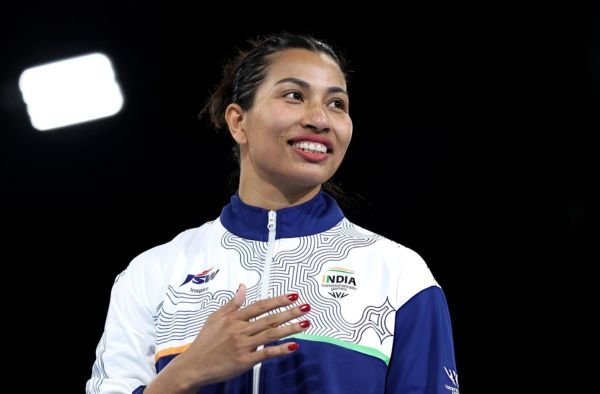
India’s Olympic bronze medallist returned from Glasgow with her first Commonwealth Games medal, finishing with silver in her third appearance at the event. Yet, as the Indian boxing contingent met Union Sports Minister Mansukh Mandaviya after scripting a historic campaign of 10 medals, including seven golds, Lovlina made it clear that her greatest achievement over the past year had little to do with the medal she had just won.
It was about finding the motivation to continue boxing after the disappointment of the Paris Olympics. “First of all, it was a big deal for me to continue for such a long time. There were many ups and downs after the Paris Olympics. There were many questions as to whether I wanted to continue or not. But I came back and continued. That is a big deal for me,” Lovlina said after India’s record-breaking boxing campaign.
The candid admission offered a glimpse into the mental battles elite athletes often fight away from the spotlight. While medals, rankings and podium finishes dominate headlines, the journey back after a disappointing Olympic cycle is frequently the toughest challenge of an athlete’s career. Injuries, dips in confidence and uncertainty over the future have ended many promising sporting journeys. Lovlina’s decision to remain in the ring, therefore, became a victory long before she stepped into it at the Commonwealth Games.
The 28-year-old entered Glasgow seeking the one major medal missing from her collection. An Olympic bronze medallist from Tokyo, a World Championships bronze winner and an Asian Championships medallist, the Commonwealth Games podium had remained elusive despite two previous appearances.
Although the campaign ended with silver rather than gold, Lovlina refused to let disappointment overshadow the significance of the moment. “I have won medals in almost all games and competitions. But yes, it would have been better if I had won gold. I am very happy for my team because they have done so well. Seven golds is a big thing for all of us. I am ready for the Asian Games as well. I have to do better and win gold,” she said.
Her performance contributed to India’s most successful Commonwealth Games boxing campaign. The Indian contingent secured 10 medals, seven of them gold, underlining the country’s growing stature in world boxing. The results also reflected the depth that has steadily developed across weight categories through consistent performances at youth, Asian and World Championships in recent years.
Foreign coach Santiago Nieva described the campaign as a defining moment for Indian boxing. “It was a historic result for us. We had some great performances. It gives us a lot of confidence going into the next competitions.”
Nieva has played a significant role in India’s rise on the international stage over the past decade, helping produce Olympic medallists, world champions and Asian champions. For him, Glasgow was not merely about the medals won but about validating the depth within the national programme.
He pointed to Sakshi’s gold medal in the women’s 51kg category as evidence of India’s increasing competitiveness. “Going into this competition, I was feeling that in women’s 51kg we needed to get a gold medal because just to qualify here, in the selection trials we had three world champions and a couple of youth world champions. It was an extremely strong field, and she came through there.”
Reflecting on the final, Nieva praised the composure shown by the young boxer. “She had a very strong opponent from England in the final, but the way Sakshi boxed and showed her experience looks very promising for the future.”
The coach believes the Commonwealth Games have strengthened India’s preparations for the challenges ahead, with the focus now shifting towards the Asian Games and the Los Angeles 2028 Olympic qualification cycle. The Commonwealth Games often serve as a valuable testing ground for Indian boxers, offering exposure against established boxing nations before tougher continental and global competitions.
Among those already looking beyond Glasgow is reigning world champion Jaismine Lamboria, whose title-winning performance came after overcoming illness just weeks before the Games.
“The main target is the same, LA 2028. Every player keeps improving. We will keep improving.”
For Lamboria, arriving in Glasgow as the reigning world champion brought heightened expectations rather than additional pressure. “It motivated me a lot. I was not in a position to…”
Although her recovery was far from ideal, she used the responsibility that came with being a world champion to fuel her return, once again demonstrating the resilience that has become a defining trait of this Indian boxing squad.
The success of the boxing contingent also reflects the broader transformation of Indian boxing over the past decade. Once reliant on a handful of established names, the programme now consistently produces champions across age groups through structured domestic competitions, stronger coaching systems and greater international exposure.
Selection trials have become fiercely competitive, with several world and youth champions competing for a single national berth. That internal competition has elevated standards within the squad and ensured that every athlete entering international tournaments has already survived an intensely competitive domestic pathway.
For Lovlina, however, the medals and records remain secondary to the personal journey she has travelled over the past year. After questioning whether she wanted to continue in the sport, she has emerged from one of the most difficult phases of her career with renewed purpose and another major international medal.
As Indian boxing turns its attention towards the Asian Games, Lovlina’s story offers a reminder that sporting success is not always measured by the colour of a medal. Sometimes, the biggest victory is finding the strength to keep stepping back into the ring when doubt threatens to pull you away.
In Glasgow, that resilience earned India another silver. More importantly, it gave one of the country’s most accomplished boxers the belief that her best may still be ahead.

