

South Africa signed off their T20I series against India with authority, showcasing form, depth, and composure ahead of a crucial global season. A commanding 23 run win in the final match sealed a 4-1 series triumph, underlining the hosts’ growing strength in the shortest format and offering a timely boost ahead of upcoming ICC tournaments.
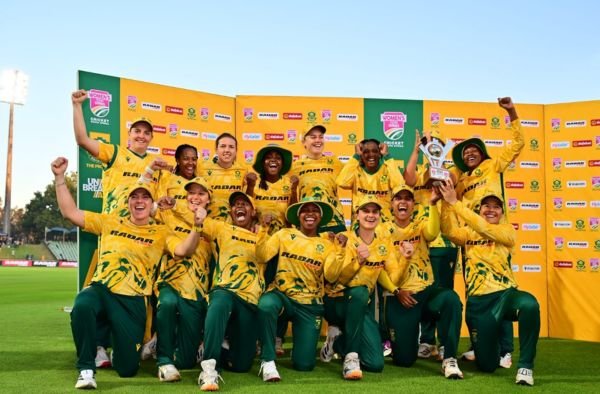
Led by skipper Laura Wolvaardt, South Africa once again demonstrated why they are considered one of the most balanced sides in women’s cricket today. Opting to bat first in the decider, they posted a competitive 155 for 6, anchored by a superb unbeaten 92 from Wolvaardt. In response, India struggled to build momentum and finished on 132 for 8, falling short by 23 runs.
The series result marked a strong turnaround for South Africa, especially after their recent 4-1 defeat to New Zealand. This time, they reversed the scoreline against India, reflecting both tactical improvements and individual brilliance. The performance also highlighted their readiness for major tournaments, including the ICC Women’s T20 World Cup.
Wolvaardt was the undisputed star of the series. Accumulating a remarkable 330 runs, she emerged as the highest run scorer and set a new benchmark for the most runs in a bilateral women’s T20I series. Her consistency stood out, registering multiple fifty plus scores and leading from the front with composure and authority. Notably, her tally surpassed the previous mark set by Amelia Kerr, adding further significance to her achievement. Her match winning innings in the final game was a masterclass in pacing and adaptability.
Initially known for her strength on the off side, Wolvaardt displayed a more complete range of strokes, confidently targeting the leg side and accelerating when required. Her unbeaten 92 came off 56 deliveries and proved to be the backbone of South Africa’s innings, especially as wickets fell at the other end.
Despite Wolvaardt’s dominance, South Africa’s middle order showed vulnerability. After reaching a stable position, they lost six wickets for 49 runs, allowing India to claw their way back into the contest. Bowlers like Renuka Singh and Deepti Sharma made crucial breakthroughs, ensuring the total remained within reach.
India, however, failed to capitalize during the chase. Early wickets derailed their innings, and the lack of substantial partnerships proved costly. The only notable resistance came from Bharti Fulmali, who scored 40 and kept India in contention briefly. A 38 run stand with captain Harmanpreet Kaur offered some hope, but regular wickets halted any sustained recovery.
South Africa’s bowlers complemented their batting effort with discipline and control. Nonkululeko Mlaba and Nadine de Klerk picked up key wickets, while the fielding unit added pressure through sharp catching and alert ground work. Although both teams had their share of dropped chances across the series, South Africa’s overall execution in the final game stood out.
A defining moment in the chase came behind the stumps, where Sinalo Jafta produced a sharp stumping to dismiss Deepti Sharma at a crucial juncture. Her quick reflexes effectively shut the door on India’s chances, highlighting the importance of wicketkeeping in tight contests.
For India, the series exposed areas that require attention. While there were positives, including Deepti Sharma’s return to form and promising signs from younger players, concerns remain around their powerplay bowling and batting consistency. The absence of Smriti Mandhana in the latter matches also disrupted their top order stability.
As both teams look ahead, the contrast in momentum is evident. South Africa leave the series with confidence and clarity, while India will need to regroup and refine their approach. With key international assignments approaching, this series has provided valuable lessons, but also a clear indication of where each side stands in the evolving landscape of women’s T20 cricket.

