
For years, brands entered women’s sports with the familiar playbook: put a logo on a jersey, buy some television inventory, attach a campaign to a tournament and call it a commitment. That model is becoming increasingly inadequate. As women’s sport grows into a powerful cultural and commercial force, the more interesting question is no longer whether brands will invest, but how deeply they are willing to participate in the story.
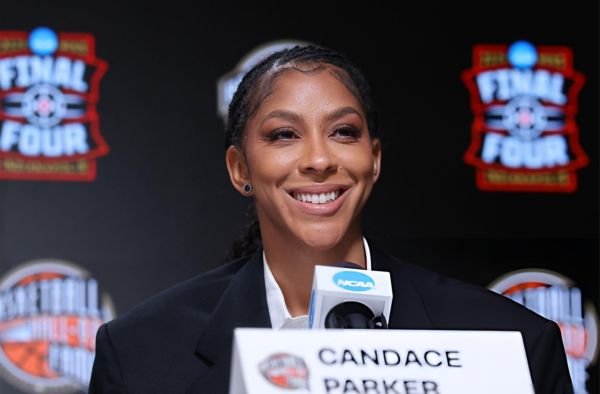
Eli Lilly’s latest campaign with Amazon Ads offers a useful example of that shift. The pharmaceutical company has partnered with Amazon Ads on a 30-second spot starring basketball legend and WNBA on Prime analyst Candace Parker, which debuted during a WNBA on Prime doubleheader on July 30. Developed collaboratively by Lilly, Amazon Ads’ creative strategists and its sports-brand partnership team, the campaign places women’s health inside the world of elite sport rather than treating it as a separate conversation.
“Women’s sports are at the center of culture, and conversations about health belong there too,” Lina Polimeni, senior vice president and consumer CMO at Lilly, said in a statement. “For 150 years, Lilly has broken through barriers, always pushing toward what comes next. That’s the same grit that’s made women’s sports one of the most exciting stories in culture today, and it’s exactly where we want to be – not just as a sponsor on the sidelines, but a partner invested in where the game is going.”
The campaign arrives at a particularly significant moment for women’s basketball. The WNBA is no longer operating on the margins of the American sports economy. Its new collective bargaining agreement, announced in March 2026, is expected to deliver more than $1 billion in player salaries and benefits over its duration, while the 2026 salary cap is set at $7 million, compared with $1.5 million in 2025. The commercial ecosystem is expanding alongside the league.
Prime Video’s 11-year agreement with the WNBA, which began in 2026, includes 30 regular-season games worldwide each season as well as postseason coverage. CBS Sports has also expanded its WNBA partnership, with up to 20 regular-season games on CBS and Paramount+ in 2026. For advertisers, this creates a very different proposition. Women’s sport is no longer simply an emerging category to support. It is becoming a destination for audiences, storytelling and cultural relevance.
Lilly appears to understand that opportunity. The company’s new campaign follows its May “Start How You Can” campaign featuring WNBA superstar Caitlin Clark, created with Wieden+Kennedy Portland. Lilly is also the jersey patch sponsor of Clark’s Indiana Fever. The company has further extended its presence in women’s sport through the Women’s College All-Star Game, where it returned as title sponsor in 2026 for the second consecutive year.
The Parker campaign takes that strategy a step further by making the athlete herself the narrative. In the spot, Parker is shown not simply as a basketball player, but through a series of identities: wife, mother, president, owner, hustler, winner, analyst and trailblazer. The message is deliberately broader than sporting achievement. Parker’s career becomes a vehicle for discussing health as something that supports every version of a woman’s life.
That is also what makes Parker a particularly strategic choice. She is not only a former WNBA superstar. The Naismith Basketball Hall of Fame has selected her for its Class of 2026, with the enshrinement ceremony scheduled for August 15. Parker’s résumé includes three WNBA championships, two league MVP awards, a Finals MVP, seven All-Star selections and two Olympic gold medals.
Her transition from athlete to analyst and business leader also mirrors the central idea of Lilly’s campaign: an athlete’s identity does not end when competitive sport does. “We see that brands stand out more when they’re leveraging our own talent to tell their stories during the live events,” said Amy McDevitt, head of sports partnerships at Amazon Ads. “It tells the viewer, ‘This brand gets me because they know I’m watching this content and they’re delivering me a message using some of the same experts in their creative.’”
That is where the campaign becomes more than a conventional sponsorship activation. Amazon itself has increasingly positioned Prime Video as an environment where live sport, storytelling and advertising can coexist. At Cannes Lions 2026, Amazon Ads highlighted how brands can use live sports environments to create integrations that feel native to the broadcast rather than interruptions around it.
Lilly is effectively applying that philosophy to women’s health. Its broader sports strategy also extends beyond basketball. In February, the company partnered with the United States Olympic & Paralympic Committee on an athlete recovery programme supporting rehabilitation and recovery through the LA28 Olympic and Paralympic Games. Lilly’s own partnership platform describes athletes as important voices in conversations around holistic health, reinforcing the company’s attempt to connect its healthcare identity with sport.
There is, of course, a commercial calculation behind all of this. Brands are increasingly recognising that audiences of women’s sports are valuable, engaged and growing. A 2026 WNBA partnership playbook citing research from The Team found a premium among women’s sports fans across measures including sponsor awareness, consideration, purchase intent and advocacy. But the strongest takeaway from Lilly’s strategy is not that a pharmaceutical company has discovered women’s sports as an advertising vehicle. It is that the company is attempting to align its core category, health, with a sports culture where conversations about women’s bodies, longevity, performance and identity are becoming increasingly visible.
The next phase of women’s sports sponsorship will likely be judged by exactly this standard. A patch on a jersey can create visibility. A television commercial can create awareness. But brands that want to be part of the long-term growth of women’s sport will have to do more than occupy its biggest moments. They will have to understand the people, stories and conversations that make those moments matter.
Lilly’s collaboration with Parker suggests it is trying to make that transition: from advertiser watching the game from the sidelines to a brand that wants to become part of the conversation around why the game, and the women playing it, matter.

