
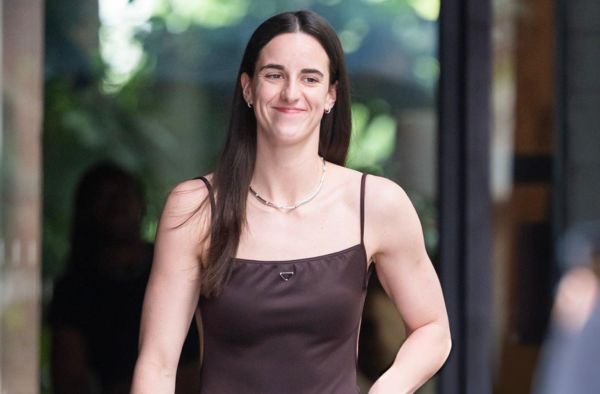
Caitlin Clark‘s financial rise tells a story that extends far beyond basketball. The Indiana Fever guard has become one of the most commercially powerful athletes in women’s sport, with endorsements doing the heavy lifting behind a reported $16.1 million in total earnings in 2025, despite her WNBA salary being only a small fraction of that figure. The contrast is striking. Clark earned $78,066 from her WNBA contract in 2025, according to ESPN, yet her total income placed her sixth among the world’s highest-paid female athletes in Sportico’s 2025 rankings.
That gap between salary and commercial value has become one of the defining stories of Clark’s professional career. Long before she entered the WNBA, Clark had already established herself as a sporting phenomenon at Iowa. Her range from well beyond the three-point line, passing ability and scoring numbers turned women’s college basketball into appointment television.
She eventually became the NCAA Division I all-time leading scorer, a distinction that helped carry her popularity into the professional game. When the Indiana Fever selected her No. 1 overall in the 2024 WNBA Draft, the expectation was that she would transform a franchise. Instead, the impact quickly extended across the league and into the wider sports economy.
Clark’s rookie season delivered the basketball credentials to match the attention. She won WNBA Rookie of the Year, led the league in assists and set the single-season rookie record for assists with 337. She also became the first rookie in WNBA history to record a triple-double. Her influence was not limited to statistics.
ESPN reported that Clark’s presence was associated with a significant economic impact in Indianapolis, while her rookie season helped contribute to the WNBA’s highest regular-season viewership in 24 years and its strongest attendance figures in more than two decades.
Endorsements become the real game changer. Clark’s commercial portfolio has grown rapidly, with Nike among the biggest partnerships. In August 2025, Nike announced Clark as a signature athlete, including plans for a signature logo, apparel collection and eventually a signature sneaker. Her reported endorsement portfolio also includes major brands such as Wilson, Gatorade, State Farm, Gainbridge, Panini, Xfinity, Eli Lilly and Prada.
That commercial pull explains why Clark can sit alongside athletes from sports where individual prize money and salaries are traditionally much higher. Sportico’s 2025 ranking placed Coco Gauff first among female athletes with $31 million, while Clark’s $16.1 million was enough for sixth.
Sportico estimated that the world’s 100 highest-paid athletes collectively earned $6.05 billion in 2025, although no woman made the overall top 100. The figures also reveal the wider economics of women’s sport. For many of the world’s highest-earning female athletes, sponsorships remain the dominant source of income because professional salaries and prize purses have historically lagged behind men’s sport.
Clark’s rise therefore represents both a breakthrough and a warning sign. There is, however, evidence that the salary side of the equation is beginning to change. The WNBA and WNBPA agreed to a landmark new collective bargaining agreement in 2026, with the league announcing a salary cap increase from $1.5 million in 2025 to $7 million in 2026. The agreement also raised the first-year maximum salary to $1.4 million and pushed average salaries above $583,000.
For Clark specifically, ESPN reported that her salary was projected to rise to around $530,000 in 2026, with opportunities for substantially larger contracts in subsequent seasons under the new agreement. That is a dramatic improvement from her rookie-scale earnings, but it also underlines just how extraordinary her commercial value has been.
Caitlin Clark’s earnings should not simply be celebrated as a personal financial milestone. They should be viewed as evidence of what women’s sport can become when audiences, broadcasters, sponsors and athletes converge around a compelling star. The important question now is whether Clark’s commercial success can help create a stronger economic ecosystem for the players around her.
A superstar can sell tickets and attract sponsorships, but sustainable growth requires those revenues to eventually translate into better salaries, facilities, visibility and opportunities across the entire women’s game. Clark has already proved that women’s basketball can command attention at scale. The next challenge is ensuring that the financial rewards of that attention do not remain concentrated around a handful of stars.
Her $78,066 WNBA paycheck and reported $16.1 million total income tell two very different stories. The first reflects where women’s basketball has been. The second offers a glimpse of where it could be going.

