
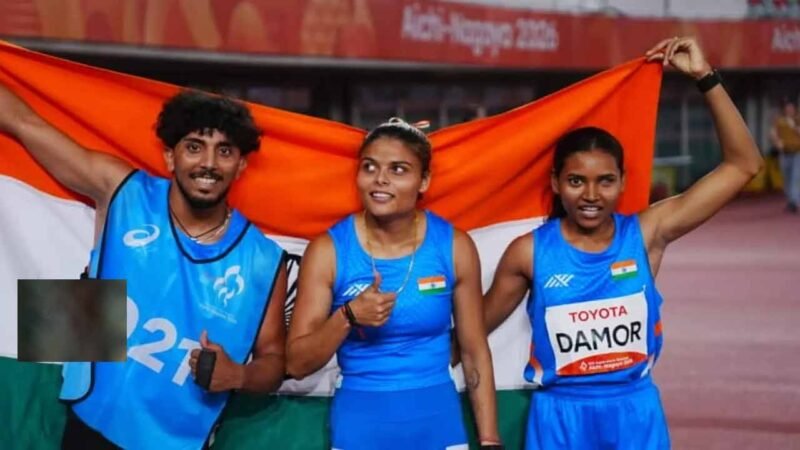

India’s historic fourth-place finish at the 2026 Asian Para Games was built on a strong network of state-level talent, with Haryana, Uttar Pradesh and Tamil Nadu emerging as the leading contributors to the country’s record-breaking campaign in Aichi-Nagoya, Japan. With 97 athletes from 20 states and union territories winning medals, India’s achievement highlighted the growing geographical spread of para-sport talent, even as a handful of states continued to drive the bulk of its gold-medal success.
India finished the Games with 114 medals, comprising 30 gold, 35 silver and 49 bronze, marking its best-ever performance at the continental para-sport event. The contingent finished fourth in the overall standings, surpassing India’s previous best of 108 medals at the 2023 Hangzhou Games, according to contemporary reports. According to the state-wise medallist breakdown, 97 of India’s 167 athletes returned with at least one medal. That means approximately 58% of the contingent reached the podium, an encouraging measure of the squad’s overall effectiveness across disciplines.
Haryana topped the state-wise list with 24 medallists, followed by Uttar Pradesh with 13 and Tamil Nadu with nine. Together, the three states accounted for approximately 47% of India’s medallists, while athletes from the other 17 states and union territories contributed the remaining 53%. The distribution also revealed a concentration of gold-medal success. Of India’s 27 individual gold medals, Haryana athletes won seven and Uttar Pradesh athletes claimed five.
Maharashtra and Rajasthan contributed three individual gold medals each, underlining their importance to the national campaign. Jammu and Kashmir and Bihar also produced notable results. Sheetal Devi, representing Jammu and Kashmir, won two gold medals and one silver in para-archery, while Bihar’s Shailesh secured one gold and one bronze. Both states had one medallist in the supplied breakdown, and each produced an athlete who won gold.
State-wise distribution of Indian medallists
| State/UT | Medallists | Individual Gold Medals |
|---|---|---|
| Haryana | 24 | 7 |
| Uttar Pradesh | 13 | 5 |
| Tamil Nadu | 9 | 2 |
| Rajasthan | 8 | 3 |
| Karnataka | 7 | 1 |
| Maharashtra | 7 | 3 |
| Gujarat | 6 | 1 |
| Odisha | 3 | 0 |
| Andhra Pradesh | 3 | 0 |
| Himachal Pradesh | 2 | 2 |
| Telangana | 2 | 1 |
| Chhattisgarh | 2 | 0 |
| Jharkhand | 2 | 0 |
| Punjab | 2 | 0 |
| Kerala | 2 | 0 |
| Jammu and Kashmir | 1 | 1 |
| Bihar | 1 | 1 |
| Nagaland | 1 | 0 |
| Madhya Pradesh | 1 | 0 |
| Delhi | 1 | 0 |
Para-athletics was the biggest contributor to India’s success, accounting for 65 medals, including 22 gold. Of the 97 Indian medallists, 53 came from the discipline, representing approximately 54.6% of the medal-winning athletes. India fielded 62 athletes in para-athletics, and 53 won at least one medal, translating to a medal conversion rate of around 85%. The figures underline the discipline’s central role in India’s fourth-place finish. Haryana contributed 15 para-athletics medallists, while Uttar Pradesh added 10.
Together, their 25 athletes accounted for 34 of India’s 65 para-athletics medals, or approximately 52.3% of the discipline’s total. The results reflected the importance of established state-level para-sport ecosystems in developing athletes capable of competing successfully at international events. Para-athletics remained India’s strongest discipline, improving on its medal contribution at the previous edition.
Para-badminton was India’s second-most successful discipline, contributing 16 medals through 15 medallists. Tamil Nadu emerged as a major contributor, with five athletes involved in 10 of the country’s 16 medals in the sport. Thulasimathi Murugesan and Naveen Sivakumar were among the Tamil Nadu athletes who contributed to India’s gold-medal success. The discipline’s overall return of three gold, five silver and eight bronze medals demonstrated the depth of India’s badminton programme.
Elsewhere, Rajasthan made a significant contribution to para-shooting, accounting for four of India’s five medals in the discipline, according to the supplied state-wise analysis. Karnataka and Haryana together secured seven of the 11 medals won in para-swimming, highlighting the contribution of athletes from these states beyond track and field. India’s 114-medal haul represents more than a new national benchmark. The state-wise figures reveal both the strength and the challenge facing Indian para-sport.
Haryana and Uttar Pradesh remain major contributors, particularly in para-athletics, while Tamil Nadu has established a strong presence in para-badminton. The fact that athletes from 20 states and union territories won medals is encouraging. However, expanding competitive opportunities, coaching support and access to specialist facilities across more regions could help India build a broader base of gold-medal contenders. The next step is not only to increase the overall tally, but also to make podium-level performances more geographically widespread.
India’s performance in Aichi-Nagoya has set a new standard for the country at the Asian Para Games. The combination of 97 medallists, 30 gold medals and contributions from 20 states and union territories reflects both the quality of its leading athletes and the growing reach of para-sport across the country. With para-athletics leading the charge and para-badminton, shooting and swimming adding valuable medals, the challenge now is to sustain this momentum and strengthen the development pipeline ahead of future international competitions.

