

In a move that could significantly reshape the global sporting landscape ahead of the next Olympic cycle, World Aquatics has announced that athletes from Russia and Belarus will once again be allowed to compete under their national flags and anthems at its events. The decision marks a major departure from the restrictions imposed in the aftermath of the Russian invasion of Ukraine, which saw athletes from both nations sidelined or forced to compete under neutral status across multiple international competitions.
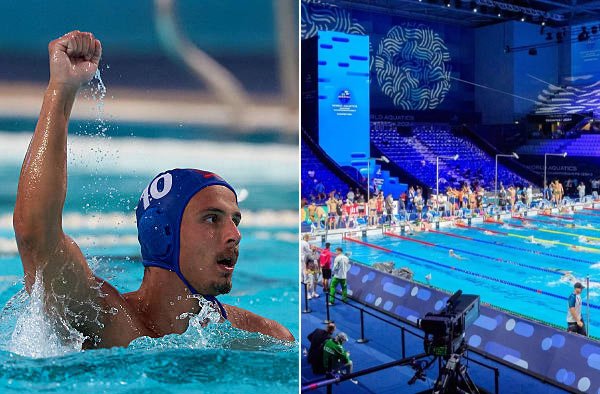
Under the revised policy, senior swimmers and athletes in disciplines such as diving, water polo, and artistic swimming will now participate like any other nation, wearing national kits and competing with official symbols. Previously, Russian and Belarusian athletes were subjected to strict vetting processes and had to compete as “neutral athletes,” without flags, anthems, or national identifiers. This mirrored broader Olympic policies that aimed to balance inclusion with political sensitivities.
Husain Al Musallam, president of World Aquatics, emphasised the organisation’s commitment to unity in sport: “We are determined to ensure that pools and open water remain places where athletes from all nations can come together in peaceful competition.”
Notably, the governing body had already begun easing restrictions at the junior level in recent months, making this latest announcement a natural progression toward full reinstatement.
While the decision applies specifically to World Aquatics competitions, such as the World Championships, it carries broader implications for the global sporting ecosystem.
As one of the most influential federations within the Olympic structure, World Aquatics’ stance could influence other governing bodies and potentially accelerate the reintegration of Russian and Belarusian athletes across sports. The International Olympic Committee has so far maintained a more cautious approach. At recent events, including the Winter Olympics, athletes from these nations competed under the designation of “Individual Neutral Athletes,” without national representation.
However, the IOC has shown signs of gradual relaxation. In late 2025, it recommended allowing Russian and Belarusian athletes to participate in youth-level competitions under their national flags, hinting at a possible phased return. With the 2028 Los Angeles Olympics on the horizon, decisions like this could play a pivotal role in shaping participation policies. The debate surrounding Russian and Belarusian participation has been one of the most complex issues in modern sport.
Following the Ukraine conflict in 2022, many international federations imposed bans or restrictions, citing the need to uphold sporting integrity and respond to geopolitical realities. At the same time, there has been ongoing discussion about whether athletes should be held accountable for actions beyond their control.
World Aquatics’ latest move signals a shift toward prioritising inclusivity and the principle of sport as a neutral ground. However, it is also likely to face criticism from stakeholders who believe restrictions should remain in place until broader geopolitical conditions change.
For swimmers and aquatic athletes from Russia and Belarus, the decision opens the door to full international representation once again- an important factor not just for identity, but also for sponsorships, rankings, and national pride. It also restores a sense of normalcy in elite competition, where the presence of national symbols plays a significant role in the atmosphere and narrative of global events.
As international sport continues to navigate the intersection of politics and competition, World Aquatics’ decision could prove to be a turning point. Whether other federations follow suit and whether the IOC ultimately adopts a similar stance for senior athletes at the Olympics remains to be seen. What is clear, however, is that the conversation around neutrality, fairness, and global unity in sport is far from over.

