

The Asian Games have not yet reached their opening ceremony, but for several athletes, the first test of the continental showpiece has already come away from the competition arena. With accommodation delays leaving members of the Indian contingent without their allotted rooms, the Sports Ministry has turned to an unusual contingency plan, reaching out to the Indian diaspora in Nagoya in case the shortage worsens.
The move comes on the eve of the official opening of the Aichi-Nagoya Asian Games, which begin on Saturday and run until October 4. More than 11,000 athletes from 45 countries and regions are expected to compete across 43 sports, while the overall number of registered athletes and officials is around 17,000. India’s Chef-de-mission Sahdev Yadav said on Friday that around 35 Indian athletes had already been shifted to hotels after they failed to receive their designated accommodation. With different contingents arriving according to their competition schedules, officials fear the logistical pressure could increase over the coming days.
“The sports ministry has reached out to the Indian diaspora to be on standby to help it with the accommodation of its athletes in case there is shortage of rooms for them during the course of the Asian Games,” a travelling Ministry official said. The problem is rooted in the Games’ unusual accommodation model. Instead of constructing a conventional athletes’ village, organisers have opted for a combination of hotels, temporary container-style units and the Costa Serena cruise ship, which is being used to house thousands of athletes and officials.
The Olympic Council of Asia has defended the decision as a cost-conscious approach designed to avoid leaving behind an expensive, underused Games village after the event. However, the practical challenges have become increasingly difficult to ignore. Athletes from several countries have reported delays, cramped conditions and problems with room allocations.
Japan itself has had to consider alternative accommodation after cases involving inappropriate room assignments, while South Korean athletes have publicly questioned the conditions in the temporary facilities. For India, the contingency planning has now extended beyond hotels. A senior Sports Ministry official said the Indian Embassy had helped reach out to around 2,000 Indian families in Nagoya, with members of the community offering assistance if additional rooms are required.
“The first priority would be to accommodate the athletes in good hotels but if there is still a requirement for more rooms there is the Indian diaspora to fall back on,” said the official. The Indian badminton contingent has already been moved to hotels after facing delays in receiving accommodation. Officials say they will remain there for the time being, while arrangements are being monitored for athletes yet to arrive. “The diaspora has been very cooperative and they are helping in every way possible, including helping athletes at the airport by guiding them to the welcome area,” the official said.
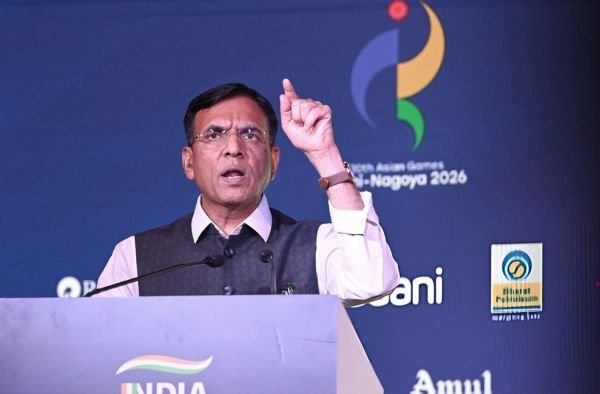
Sports Minister Mansukh Mandaviya also arrived in Nagoya on Friday and briefly attended the Indian contingent’s flag-hoisting ceremony. The ceremony itself was delayed by more than an hour amid what officials described as “miscommunication” between the Olympic Council of Asia and the local organising committee. The wider Games have also faced scrutiny over transport and accreditation procedures.
Yet the Indian government’s account is not the only one on the accommodation dispute. The OCA and Aichi-Nagoya organising committee have maintained that all 17,000-plus participants registered before the July deadline were provided with Games-appropriate accommodation. Organisers have attributed some of the pressure to participation rising beyond the original expectation of about 15,000 athletes and officials following the addition of new sports.
That creates a striking contrast at the heart of the controversy. On paper, accommodation has been guaranteed. On the ground, individual delegations are still having to make alternative arrangements.
The first battle of the Nagoya Asian Games is not being fought on the field. It is being fought over logistics. The decision to avoid a traditional athletes’ village was presented as a more sustainable and financially responsible model, but the success of such an approach ultimately depends on whether athletes can move from airport to accommodation, accommodation to training and training to competition without unnecessary disruption.
For India, the decision to prepare a diaspora-backed contingency plan is less about seeking hospitality and more about ensuring that accommodation problems do not become performance problems. Athletes have spent years preparing for these Games; the expectation now is that once they arrive, the focus should shift entirely to competition.
The OCA has insisted that the accommodation model is functional and that complaints are being addressed. The Indian response, meanwhile, shows that contingencies are already being activated. With competition now beginning in earnest, Nagoya’s organisational challenge will be to ensure that the Games are remembered for performances and medals rather than the rooms in which athletes were waiting to sleep.

