

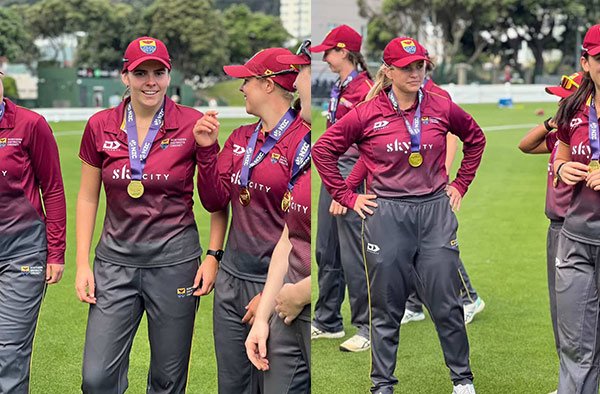
Northern Brave etched their name into New Zealand domestic cricket history on Saturday, clinching their first-ever Hallyburton Johnstone Shield title with a commanding 67-run victory over the heavily favoured Wellington Blaze at the Basin Reserve. In a final that defied pre-match expectations, the Brave combined discipline, belief, and ruthless execution to topple one of the competition’s most decorated sides.
Having won the toss, Northern Brave chose to bat first, but their innings never truly gained fluency. Wellington’s bowlers applied consistent pressure, and the Brave were eventually dismissed for 182 in 44 overs, a total that appeared below par on a ground known for rewarding batters. Yet, what followed was a stunning demonstration of collective resolve.
The Brave’s innings was built around gritty contributions rather than dominance. Their top-order battled challenging conditions, while the middle and lower order worked hard to keep the scoreboard ticking. Crucially, the side refused to panic, ensuring they had something to bowl at, a decision that proved inspired.
If Northern Brave’s batting was about perseverance, their bowling was about precision – led superbly by Marama Downes, who delivered a spell that defined the final. The experienced seamer struck early and often, finishing with figures of three wickets while also applying relentless pressure.
Wellington’s chase unravelled almost immediately. Opener Hannah Francis was removed in the third over, setting the tone for what would become a dramatic collapse. Just three overs later, Downes produced the breakthrough moment of the match, trapping star all-rounder Melie Kerr leg before wicket for just four runs, a dismissal that sent a ripple through the Basin Reserve.
The collapse accelerated when Georgia Plimmer fell for 18 in the seventh over, leaving the Blaze reeling at four wickets down inside the first eight overs. From there, the pressure only intensified, with Northern Brave’s bowlers and fielders operating with clarity and confidence.
Despite their depth and experience, Wellington Blaze never recovered. The required run rate climbed steadily, wickets continued to fall, and the Blaze were eventually bowled out for 115 in the 41st over- falling well short of their target.
Downes capped off a memorable all-round performance by contributing a valuable 25 runs with the bat earlier in the day, underlining her influence on the final.
The title win was the crowning moment of a season defined by consistency and quiet momentum. Northern Brave had only reached the Hallyburton Johnstone Shield final once before, and this campaign marked a significant evolution in the side’s belief and execution.
Throughout the season, the Brave built their success on balance, combining disciplined bowling units with adaptable batting performances. Rather than relying on one standout star, they thrived on contributions across the squad, a hallmark of championship-winning teams.
After navigating the league phase with composure, Northern Brave entered the final as underdogs against a Wellington side stacked with international experience. Yet, it was the Brave who displayed greater clarity under pressure, seizing key moments and refusing to let the occasion overwhelm them.
Their victory also signals a shift in the domestic women’s one-day landscape in New Zealand, long dominated by traditional powerhouses. By lifting the Hallyburton Johnstone Shield for the first time, Northern Brave have announced themselves as genuine contenders in the years to come.
As celebrations unfolded at the Basin Reserve, the significance of the moment was clear, not just a trophy won, but a belief cemented. For Northern Brave, this was more than a final; it was the arrival of a new force in New Zealand women’s domestic cricket.

