

Just days after lifting continental silverware, Japan women’s national football team finds itself entering a phase of uncertainty, following the unexpected departure of head coach Nils Nielsen. The decision, announced by the Japan Football Association, has sparked debate across the footballing world, given the timing and circumstances surrounding his exit.
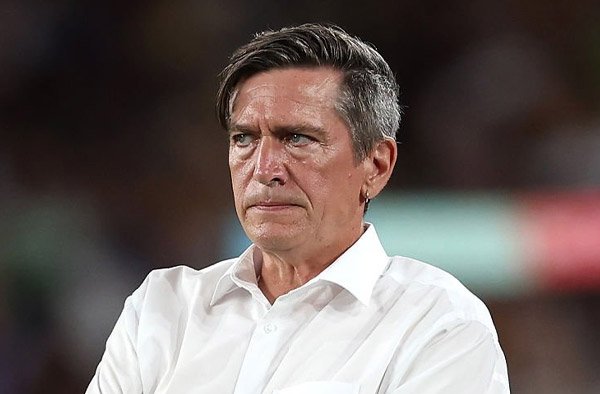
Nielsen’s departure comes less than two weeks after he guided Japan to a dominant title-winning campaign at the Women’s Asian Cup. Japan capped off their impressive run with a 1-0 victory over hosts Australia women’s national football team in Sydney, securing their third continental crown in the last four editions. The team’s performance throughout the tournament was nothing short of remarkable, scoring 29 goals while conceding just once.
The triumph also ensured Japan’s qualification for the 2027 Women’s World Cup, as they reached the semifinals of the competition – a milestone that underlined their continued presence among the elite in women’s football. However, the JFA confirmed that Nielsen’s tenure had come to an end, stating: “Nils Nielsen, head coach of Nadeshiko Japan (the Japanese women’s national team), stepped down upon the expiration of his contract.”
While the official statement suggested a routine conclusion, further remarks from within the federation hinted at deeper concerns. Team director Norio Sasaki, a former World Cup-winning coach, was candid in his assessment, suggesting that Nielsen’s approach might not have been suited for future ambitions.
Sasaki remarked that Japan could struggle to win next year’s World Cup under Nielsen, describing his coaching style as “a little too lax, a little too soft”. Nielsen, 54, made history in 2024 by becoming the first foreign coach to lead the Japanese women’s team, succeeding Futoshi Ikeda. Under Ikeda, Japan had reached the quarterfinals of the 2023 Women’s World Cup and the last eight at the Paris 2024 Olympics.
Before taking charge of Japan, Nielsen brought a wealth of experience from European football. He had served as the manager of Switzerland’s women’s national team from 2018 to 2022 and previously coached Denmark, guiding them to a runner-up finish at the 2017 Women’s European Championship. He also held a technical leadership role with Manchester City Women’s Team.
Despite his strong résumé and immediate success with Japan, reports suggest that concerns about communication and tactical direction had been building for months. Football journalist Kazuhiro Ishii revealed that speculation around Nielsen’s future had surfaced late last year. “I had heard vague talk that there was a possibility he might leave,” Ishii said, adding that he was still “shocked” by how quickly the situation unfolded after such a successful campaign.
Communication challenges were cited as a key issue, even though a significant portion of Japan’s squad is based in Europe. Sasaki indicated that assistant coach Michihisa Kano had gradually taken on more responsibility during training sessions following a dip in form late in 2025.
Kano has now been appointed interim head coach and will lead the team in upcoming friendlies against the United States. The JFA has suggested that Nielsen’s permanent successor is likely to be Japanese, reflecting a preference for stronger cultural and communication alignment within the squad.
Journalist Masafumi Mori echoed this sentiment, noting that “communication was an issue that always comes up when you have a foreign coach”. “The culture is different, and I think that’s a problem Japan has constantly had to deal with in the past,” he added.
Another layer to the situation is the influence of Sasaki himself, who led Japan to their historic World Cup victory in 2011 and remains a highly influential figure in the country’s football structure. While Nielsen publicly expressed appreciation for Sasaki’s guidance – stating he was “lucky to have a person like Sasaki-san to help us out” – some observers believe that internal dynamics may have played a role in the decision.
With just over a year remaining before the World Cup in Brazil, Japan faces a critical transition period. While Nielsen’s tenure delivered results, including 12 wins, four draws, and four defeats, questions remain about whether a new coaching direction can elevate the team further on the global stage.
As Japan prepares for the next chapter, the challenge will be maintaining momentum while addressing the structural and strategic concerns that led to this surprising change.

