

The upcoming SAFF Women’s Championship, scheduled to be held in Goa from May 25 to June 7, has encountered a major setback even before kickoff. The Pakistan women’s national football team has reportedly decided to withdraw from the tournament, casting uncertainty over the competition’s originally planned format and highlighting the continuing political strain between India and Pakistan.
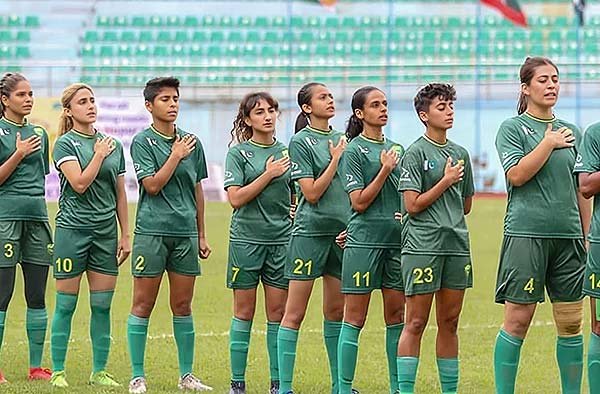
According to multiple reports, Pakistan has failed to confirm its participation even after the March 30 deadline set by the South Asian Football Federation. A senior official indicated that while there has been no formal written communication, the lack of confirmation strongly suggests that the Pakistan government has chosen not to permit the team’s travel to India.
“Pakistan will not participate. There is no official confirmation yet, but the deadline that was provided to them has already passed,” a source stated, adding that the decision appears to be influenced more by political considerations than sporting ones.
Pakistan’s absence reduces the number of participating teams from seven to six, forcing organizers to revise the competition structure. The tournament, which is one of South Asia’s most prominent platforms for women’s football, was initially expected to feature all SAFF member nations, reinforcing regional unity through sport.
Now, teams such as India, Bangladesh, Nepal, Sri Lanka, Bhutan, and Maldives are expected to compete in a revised format, likely involving a round-robin or group-stage structure followed by knockouts.
The matches will take place in Goa, a region that has increasingly become a hub for Indian football, offering quality infrastructure and strong local support for the sport.
Pakistan’s withdrawal is particularly disappointing given the team’s gradual progress in recent years. Historically considered one of the weaker sides in South Asian women’s football, Pakistan has shown signs of improvement, especially after restructuring its domestic football system and increasing international exposure.
In the previous edition of the SAFF Women’s Championship, Pakistan struggled against stronger teams such as India and Nepal, exiting the tournament in the early stages. However, their performances hinted at a developing squad with young talent and improved tactical discipline. The team has also participated in AFC qualifiers, gaining valuable experience against higher-ranked Asian teams.
Despite inconsistent results, Pakistan’s women’s team has been working towards rebuilding its identity after years of administrative challenges and limited international fixtures. Their participation in regional tournaments like SAFF has been crucial for gaining match practice and visibility.
For hosts India, Pakistan’s absence removes one of the tournament’s politically charged fixtures but does little to reduce competition intensity. India remains one of the strongest teams in the region, alongside Bangladesh and Nepal, and will aim to reclaim dominance in the tournament. The Indian women’s team has had a mixed run in recent SAFF competitions. While historically dominant, they have faced stiff challenges from emerging sides, particularly Bangladesh, who won the 2022 edition, breaking India’s long-standing supremacy.
Playing at home, India will look to capitalize on familiar conditions and crowd support to reassert itself as the region’s top team. The absence of Pakistan may simplify scheduling but also underscores how geopolitics continues to intersect with sport in South Asia.
Pakistan’s withdrawal once again highlights the fragile nature of sporting ties between the two neighboring countries. Bilateral sporting engagements have often been disrupted due to political tensions, affecting athletes and fans alike.
For the SAFF Women’s Championship, which aims to promote women’s football and regional cooperation, the development is a setback. However, the tournament is still expected to deliver high-quality football and serve as a platform for emerging talent across South Asia.
As the countdown to May 25 begins, the focus will now shift to how the remaining six teams adapt to the revised format. While Pakistan’s absence leaves a noticeable gap, the championship will continue to play a vital role in shaping the future of women’s football in the region.

