

Two Iranian women footballers have broken their silence after being granted humanitarian protection in Australia, sharing their relief at finding safety and their determination to rebuild both their lives and careers far from home. Their story has drawn international attention, highlighting the intersection of sport, geopolitics, and athlete welfare in times of crisis.
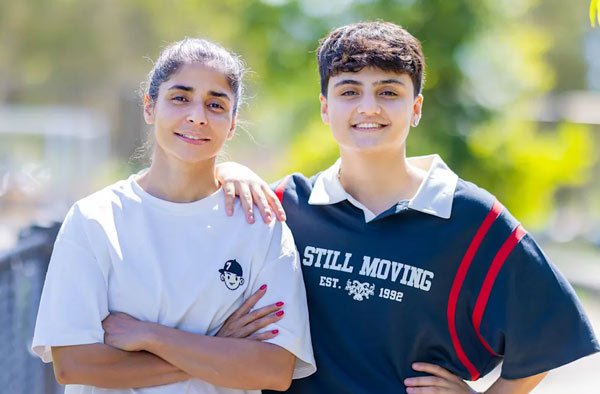
Fatemeh Pasandideh and Atefeh Ramezanisadeh issued their first public statement since receiving humanitarian visas, expressing gratitude to the Australian Government for offering them refuge during a period of uncertainty. The two players are among a small group of Iranian athletes who chose not to return home following escalating tensions in the region.
“We wish to express our deepest gratitude to the Australian government, and particularly Home Affairs Minister Tony Burke, for granting us humanitarian protection and a safe haven in this beautiful country,” they said.
Their situation emerged during the AFC Women’s Asian Cup campaign, when geopolitical developments rapidly intensified. Reports indicated that the tournament coincided with military strikes involving the United States and Israel targeting Iran, raising concerns over the safety of players should they return.
Initially, Australia extended humanitarian visas to six players and one support staff member from the Iranian squad. However, five members of the group later opted to return to Iran, leaving Pasandideh and Ramezanisadeh to remain and begin a new chapter abroad. Their decision reflects both personal safety considerations and broader anxieties faced by athletes navigating politically sensitive environments.
The two footballers have already taken early steps toward resuming normalcy, recently beginning training sessions with Brisbane Roar, a club competing in Australia’s top tier of women’s football. While their immediate focus remains on settling into a new environment, the opportunity to train professionally offers hope of continuing their sporting journeys.
“At this stage, our primary focus is on our safety, our health and beginning the process of rebuilding our lives,” they said. “We are elite athletes, and it remains our dream to continue our sporting careers here in Australia.”
Their case has also reignited conversations around athlete expression and the risks that can follow. Concerns about the Iranian squad’s safety were first raised after several players refrained from singing the national anthem during a match, an act that drew sharp criticism from Iranian state media, which reportedly labelled them “wartime traitors.” Such incidents underscore the pressures faced by athletes representing nations during politically charged periods.
The broader Iranian team eventually returned home via a complex route through Turkey, reflecting the tense circumstances surrounding their departure from Australia. Their journey was widely described as challenging, adding to the emotional and logistical strain experienced by the players.
Globally, there has been increasing awareness of the need to protect athletes who may be vulnerable due to political, social, or cultural factors. International organisations, including FIFA, have in recent years emphasised safeguarding player rights and supporting those facing extraordinary situations. However, cases like this highlight the gaps that still exist when crises unfold rapidly.
Australia’s response has been viewed by many as a humanitarian gesture that extends beyond sport. By providing visas and facilitating integration into local football structures, authorities have offered a pathway not just for safety but also for professional continuity. For Pasandideh and Ramezanisadeh, the road ahead will involve adapting to a new country, culture, and competitive environment. Yet their resolve to continue playing reflects the enduring role of sport as both a career and a source of identity.
As women’s football continues to grow globally, stories like theirs serve as a reminder that behind the game are individuals whose journeys often extend far beyond the pitch.

