

India’s growing ambitions to host major global sporting events have brought renewed scrutiny to one of its most pressing challenges in sport, the fight against doping. At a time when the country is positioning itself as a future Olympic host, global anti doping authorities have made it clear that stronger enforcement and systemic reforms will be crucial in the years ahead.
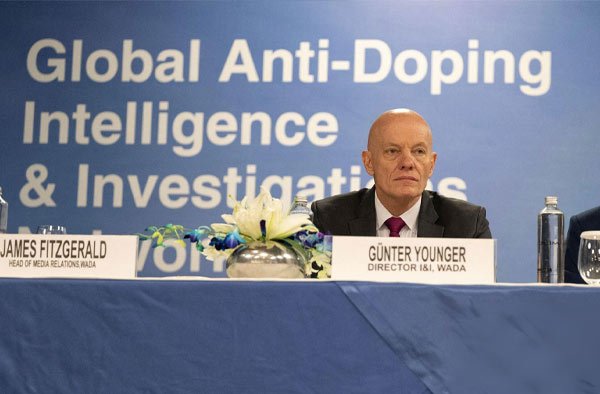
World Anti-Doping Agency President Witold Bańka addressed the issue during the Global Anti Doping Intelligence and Investigations Network conference in New Delhi, highlighting the scale of the problem and the urgency required to tackle it. According to WADA’s 2024 testing report, India recorded the highest number of doping violations in the world for the third consecutive year, with 260 positive cases emerging from 7,113 samples.
“There’s no doubt that the biggest production of illegal performance-enhancing drugs and illegal steroids is in India,” said Banka at WADA’s Global Conference in New Delhi.
The data reflects a persistent concern for Indian sport, where the number of anti doping rule violations has remained significantly high compared to other nations. Experts have pointed out that the issue is not limited to elite athletes but extends deep into grassroots and junior levels, often driven by lack of awareness, access to unregulated supplements, and pressure to perform.
Banka revealed that discussions are already underway with Indian authorities to address the supply side of the problem. He confirmed meeting with officials from the Central Bureau of Investigation to strengthen action against those involved in the manufacturing and distribution of banned substances. The focus, he suggested, must shift beyond testing athletes to dismantling the networks that enable doping.
India’s global sporting aspirations add further weight to the issue. The country is set to host the 2030 Commonwealth Games and is preparing a bid for the 2036 Olympic Games, making it imperative to align with international anti-doping standards. Banka expressed cautious optimism about India’s direction, acknowledging efforts being made by both the government and the National Anti-Doping Agency.
“I see the willingness from the government and NADA to address this issue and work more strongly on their Anti-Doping program,” he said.
He also emphasised the need for a more strategic approach to testing and education. “We need to have more intelligence and targeted testing here and need broader education to not only catch the offenders but also prevent the young athletes,” he added.
WADA has consistently advocated for stronger legal backing in India’s anti-doping framework. One of its key recommendations is to criminalise doping related activities, particularly targeting those who supply or administer banned substances to athletes. Such measures, already implemented in several countries, are seen as critical in deterring organised doping operations.
The Global Anti Doping Intelligence and Investigations Network conference, where Banka was speaking, is part of a broader international effort to combat doping through intelligence sharing and coordinated enforcement. The GAIIN programme currently involves more than 20 countries working together to track and disrupt transnational doping networks. According to WADA, the initiative has led to the dismantling of 88 illegal laboratories and the seizure of nearly 90 tons of performance enhancing drugs, with around 250 active investigations ongoing worldwide.
India has taken some steps in recent years to strengthen its anti-doping ecosystem, including increasing testing numbers and expanding educational outreach programs. However, analysts note that enforcement gaps, delays in hearings, and limited investigative capacity continue to hinder progress.
The spotlight on India’s doping challenge is likely to intensify as the country moves closer to hosting major international events. For Indian sport, the coming years will not only be about producing champions but also about building credibility and trust on the global stage.
With increased collaboration between international agencies, law enforcement, and domestic sporting bodies, there is hope that India can turn a critical weakness into an opportunity for reform. The path ahead, however, will require sustained commitment, stricter laws, and a cultural shift that prioritises clean sport at every level.

