

The most dangerous thing India’s women’s hockey team can do after a heartbreaking World Cup exit is simply move on. Defeat has a way of exposing what victory can hide. India’s narrow failure to reach the World Cup semi-finals has left behind disappointment, but it has also given this team something far more valuable before the Asian Games: a brutally clear understanding of how small the margins are at the highest level.
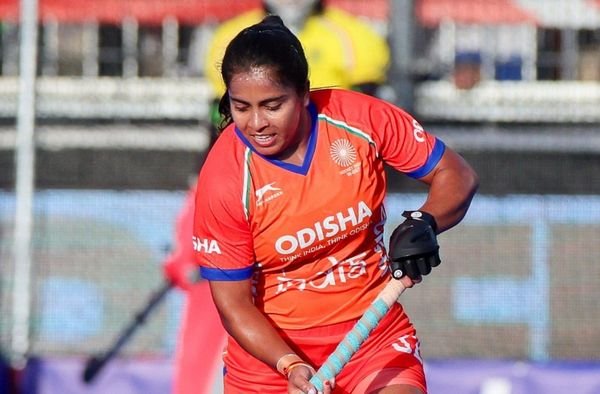
For Neha, who has lived through Olympic and Commonwealth Games heartbreak before this World Cup, the pain is familiar. For 19-year-old Sunelita Toppo, playing her first World Cup, it is a lesson that could shape the next decade of her career.
And that is why Neha’s declaration that India “will win the gold medal” at the Asian Games should not be dismissed as post-match optimism. It is a statement of intent from a group that has just discovered both its potential and its unfinished business.
India should not treat the World Cup as a tournament that ended in disappointment. They should treat it as the final examination before the Asian Games. The failure to reach the semi-finals has shown them exactly what must improve. If this team can convert that frustration into discipline, the Asian Games could become the tournament where India’s current generation finally turns promise into gold. Toppo’s reaction captures the emotional cost of India’s campaign.
“We came so close and worked so hard to come here, but we couldn’t achieve it. I know we finished the match in a draw, but our thinking was that we have to reach the semifinals,” she said. The goalless draw against Australia was not merely another result. It represented a missed opportunity for a side that had invested heavily in reaching the latter stages. India eventually secured a place in the top six, an achievement that reflects their progress, but for players who had spent weeks believing a medal was possible, sixth place could never feel like success.
Neha knows that feeling all too well. Her career has already included some of Indian hockey’s most painful near-misses, including the bronze-medal match defeat at the Tokyo Olympics and the Commonwealth Games semi-final loss to Australia in 2022. “The same thing happened here…Everyone was very sad, crying and concerned that we had come so close and missed an [opportunity to fight for a] medal. It’s very difficult, but the team is coming out of it,” Neha said.
There is an important distinction here. India are no longer simply celebrating participation at major tournaments. The expectations have changed. A top-six finish can be described as historic, but the players themselves are unwilling to pretend that it replaces a medal.
“Everyone is saying that we have created history [finish in the top six]. But a medal is a medal, so that sadness will always be there.” That mentality could ultimately prove more important than the result itself. India’s women’s hockey programme has spent the last several years trying to move from being an occasional challenger to a consistent international contender. The Tokyo Olympics gave the team unprecedented visibility and belief, while subsequent international competitions have provided repeated lessons about handling pressure, converting opportunities and managing the decisive moments of matches.
The World Cup has added another layer to that education. For Toppo, the tournament was an introduction to the intensity that accompanies elite hockey. “I got a lot of learning points. There is not much pressure in a normal tournament. But in the World Cup, there was a lot of pressure. They [seniors] helped me to cope with it, which I will be able to use in the future,” she said. That experience matters because the Asian Games will demand precisely the qualities India were tested on at the World Cup.
The Aichi-Nagoya Asian Games will be held from September 19 to October 4, with the women’s hockey competition scheduled at Gifu Prefectural Green Stadium from September 18 to October 2. India have been drawn in Pool B alongside Japan, Thailand, Singapore, Indonesia and Uzbekistan, while China, Korea, Malaysia, Kazakhstan, Chinese Taipei and Bangladesh form Pool A. India are also among the six teams that earned direct qualification for the women’s hockey competition, alongside hosts Japan, defending champions China, Malaysia, Korea and Thailand.
That makes the Asian Games a very different proposition from the World Cup. There is no mystery about India’s objective. The team is not travelling to Japan merely to compete. It is travelling with the responsibility of winning a title that has eluded Indian women’s hockey for decades. The last Asian Games gold for India’s women came in 1982. Since then, the team has collected silver and bronze medals, but the top step of the podium has remained out of reach.
That history explains Neha’s certainty. “I think we will carry this team to the Asian Games. We will try to give our best. But we have to win the gold medal. No matter what happens, we will give our best. We will win the gold medal,” she said. There is another reason for optimism. Neha describes the current squad as “the best combination”, with five senior players appearing at their third World Cup and 11 making their tournament debuts. “But it didn’t feel like their first World Cup and our third World Cup. The whole team was playing equally,” said the 32-year-old.
That sentence could be the foundation of India’s Asian Games campaign. The team has experience without becoming dependent on its veterans. It has young players who have already experienced the pressure of international hockey without being overwhelmed by it. Most importantly, the younger members now know what a major tournament feels like. India’s wider sporting ambitions at Aichi-Nagoya are substantial too. The Olympic Council of Asia confirmed that India will send 492 athletes to the Games, including 227 women, after the contingent was approved by the Sports Ministry.
India won a record 107 medals at Hangzhou 2022, including 28 golds, and will arrive in Japan seeking another strong overall performance. But women’s hockey carries a particularly emotional burden. For Neha and her teammates, gold is not merely another medal to add to India’s tally. It represents the opportunity to end a 48-year wait. The World Cup has already shown them that talent alone is not enough. A goalless draw can end a medal dream. One missed opportunity can change the entire narrative of a tournament. Because if India’s World Cup heartbreak becomes fuel rather than baggage, Neha’s bold prediction may not sound like hope at all.

