

Indian hockey has often found itself celebrating success only after medals are won. Yet, the real story begins much earlier, in selection camps, exposure tours and junior tournaments that rarely make front-page headlines. The announcement of India’s 18-member squad for the 2026 Junior Women’s Hockey Asia Cup is not merely another team list. It is a glimpse into the country’s next generation of international hockey, one that could shape India’s fortunes for the next decade.
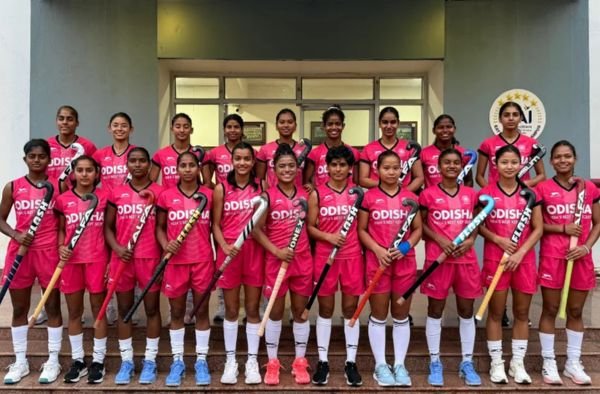
With midfielder Khaidem Shileima Chanu entrusted with the captaincy, India will head to Moqi, China, for the Junior Women’s Hockey Asia Cup from August 30 to September 13. While the tournament offers continental glory, it also serves as a crucial stepping stone in the development pathway towards senior international hockey and future World Cups. More importantly, it is an opportunity to measure whether India’s investment in grassroots women’s hockey is beginning to translate into sustained excellence.
The squad arrives after months of systematic preparation under newly appointed chief coach Tim White. Unlike previous generations that often entered major tournaments with limited international exposure, this team recently completed a competitive tour of the United Kingdom, facing Scotland’s senior side along with the Under-21 teams of England, Belgium and the United States across seven matches. The tour was specifically designed to expose young Indian players to faster, more physical styles of hockey while allowing the coaching staff to fine tune tactical combinations before the continental championship.
That preparation matters. Junior hockey is increasingly becoming a reflection of how effectively a nation develops talent rather than how many naturally gifted players it produces. Countries such as the Netherlands, Argentina and Belgium have demonstrated that sustained success at the senior level is built upon structured age-group programmes. India, too, appears to be embracing that philosophy.
The selected squad reflects a balanced mix of specialists across all departments. Goalkeepers Nidhi and Engil Harsha Rani Minz will shoulder the responsibility between the posts, while defenders Puja Sahoo, Supriya, Pooja Malik, Parwati Topno and Madhu provide defensive depth. Captain Khaidem Shileima Chanu will marshal a midfield that also features Tanuja Toppo, Binima Dhan, Roshni Aind and Geeta Yadav. Up front, Lalrinpuii, Purnima Yadav, Sukhveer Kaur, Krishna Sharma, Sanika Chandrakant Mane and Madhu Sidar form an attack capable of combining pace with creativity.
The inclusion of alternate players F. Lalbiaksiami and Tanushree Dinesh Kadu also highlights the healthy competition within the junior programme, something Indian hockey has historically lacked. However, the significance of this tournament extends beyond names on a team sheet.
Women’s hockey in India has undergone a remarkable transformation over the last decade. The fourth-place finish at the Tokyo Olympics changed public perception, while consistent international performances have inspired greater participation at the grassroots. Yet sustaining that momentum depends on ensuring there is no disconnect between junior and senior hockey.
This is where tournaments such as the Junior Asia Cup become invaluable. Several members of India’s current senior women’s team first announced themselves through junior competitions before becoming established internationals. The transition from junior promise to senior consistency is rarely immediate, but it begins with experiences like these, where players learn to compete under pressure, adapt to unfamiliar opponents and shoulder leadership responsibilities.
Khaidem Shileima Chanu’s appointment as captain is equally noteworthy. Leadership at the junior level is about much more than calling plays on the field. It is about setting standards within the group, managing expectations and learning the responsibilities that accompany wearing the Indian jersey. Those lessons often become invaluable when players eventually graduate to the senior setup.
The arrival of Tim White also introduces an interesting new chapter. His emphasis on international exposure and structured preparation suggests Hockey India is looking beyond immediate tournament results. Speaking ahead of the UK tour, White described overseas competition as a critical learning opportunity, emphasising that facing strong international opposition would help the team identify both its strengths and areas for improvement before the Asia Cup.
That long-term thinking deserves recognition. For years, India’s sporting conversation has revolved around medals alone. While podium finishes remain the ultimate objective, evaluating junior programmes solely through results can be misleading. Development is rarely linear. A successful campaign should also be measured by tactical growth, individual progression and how many players eventually establish themselves in senior international hockey.
The challenge awaiting India in China will not be straightforward. Asian rivals such as China, Japan and South Korea have invested heavily in youth development, while emerging nations continue to narrow the gap. Every match will test India’s ability to execute under pressure, particularly against teams with disciplined defensive structures and quick transitions.
Yet this squad appears equipped to embrace those challenges. The exposure gained in Europe, combined with months of preparation, provides India with a stronger foundation than many previous junior teams enjoyed. Whether that translates into silverware remains to be seen, but the process itself signals encouraging progress.
As Indian sport increasingly looks toward the 2028 Olympic cycle and beyond, the spotlight should not remain fixed solely on established stars. It should also illuminate the young athletes quietly preparing to inherit that responsibility. The Junior Women’s Hockey Asia Cup is not simply another tournament on the calendar. It is the first real examination of India’s next generation.

