

There are moments in sport that are measured not by the number of medals won but by the stories they rewrite. The 2026 Commonwealth Games in Glasgow offered India one such moment. For the first time in 24 years, Indian women outperformed Indian men in gold medals at the Commonwealth Games, winning eight golds to the men’s five.
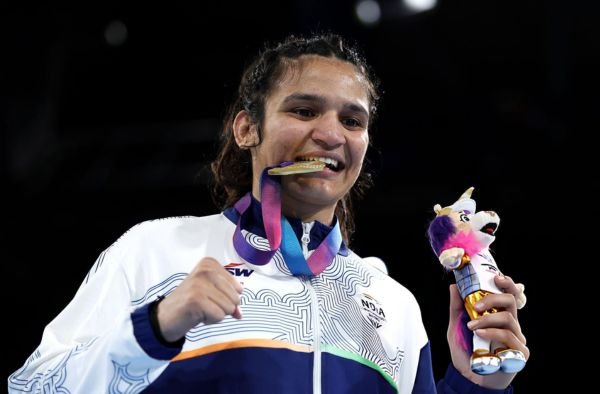
On paper, the difference is only three medals. In reality, it represents decades of changing attitudes, improving systems and a generation of women who have refused to wait for opportunities to arrive. This is not merely a statistical milestone. It is a reflection of a sporting ecosystem that is slowly, but unmistakably, becoming more inclusive.
The last time Indian women finished ahead of their male counterparts was at the 2002 Commonwealth Games in Manchester. Back then, they won 16 gold medals compared to the men’s 14, aided in part by the weightlifting programme, which awarded separate gold medals for the snatch, clean and jerk and total lift. What followed was a long period during which Indian men consistently dominated the country’s gold medal tally. From Melbourne in 2006 through Birmingham in 2022, the men led India’s gold count at every edition.
The gap was particularly stark at the Delhi Commonwealth Games in 2010, where Indian men secured 25 gold medals while the women managed 13. Yet beneath those numbers, a quiet transformation had already begun.
Every edition after Delhi showed signs of progress. At Gold Coast 2018, the difference narrowed to just one gold medal, with women winning 12 compared to the men’s 13. Birmingham 2022 saw Indian women maintain their consistency with eight gold medals despite a larger sporting programme. Glasgow 2026 has now completed that journey, placing Indian women at the forefront of the country’s Commonwealth campaign.
The context makes the achievement even more remarkable. Unlike previous editions, Glasgow featured a significantly reduced programme of just 10 sports as part of the Games’ streamlined format. Fewer events naturally meant fewer medal opportunities. Every gold therefore carried greater weight, making India’s women’s performance even more significant. Rather than benefiting from an expanded schedule, they excelled in a condensed competition where every event demanded exceptional quality.
The list of champions tells the story of a contingent that succeeded across multiple disciplines. Olympic silver medallist Mirabai Chanu once again demonstrated why she remains one of India’s greatest weightlifters by winning the women’s 48 kg title. The victory completed a historic hat trick of Commonwealth Games gold medals, reaffirming her remarkable consistency across three editions.
Boxing emerged as India’s biggest success story. Preeti Pawar, Jaismine Lamboria, Sakshi Chaudhary, Priya Ghanghas and Arundhati Choudhary collectively delivered five gold medals, helping India record its finest ever boxing campaign at the Commonwealth Games.
Their victories were not isolated performances but evidence of a thriving pipeline that has steadily developed since India’s breakthrough years under legends such as M.C. Mary Kom and Lovlina Borgohain. Today, Indian women’s boxing is no longer dependent on one superstar. It has become a system capable of producing champions across multiple weight categories.
Judo also produced a landmark achievement. Asmita Dey became India’s first ever Commonwealth Games champion in the sport by winning the women’s 48 kg title, opening a new chapter for Indian judo on the international stage.
Para athletics added another inspirational moment when Sharmila Dhankar claimed gold in the women’s F57 shot put. Her triumph reinforced the growing visibility and competitiveness of para sport in India, highlighting how elite success is no longer confined to Olympic disciplines alone.
Collectively, boxing contributed five gold medals, while weightlifting, judo and para athletics added one each. The spread across disciplines is perhaps the most encouraging takeaway.
For years, India’s women’s sporting success was often concentrated in a handful of events. Today, excellence is emerging across combat sports, strength sports and para disciplines, suggesting that the country’s talent base is becoming both broader and deeper.
This evolution has not happened overnight. Initiatives such as the Target Olympic Podium Scheme (TOPS), the Khelo India programme and increased investment in women’s high performance pathways have gradually improved access to coaching, sports science, nutrition and international exposure.
While challenges remain, particularly at the grassroots level, the gap between India’s male and female athletes has narrowed significantly because opportunity itself has become more balanced. Government support, corporate sponsorships and greater media visibility have all contributed to creating an environment where young girls increasingly view elite sport as a viable career rather than an impossible dream.
Equally important has been the influence of role models. From Karnam Malleswari and Saina Nehwal to P.V. Sindhu, Mirabai Chanu and Nikhat Zareen, each generation has inspired another. Success has become self sustaining. Young athletes entering academies today have grown up watching Indian women win Olympic medals, World Championships and Commonwealth titles. Expectations have changed because belief has changed.
That does not mean the work is complete. The Commonwealth Games, while prestigious, remain only one benchmark. The real challenge lies in translating this momentum into Olympic and World Championship success where the competition is deeper and the margins are finer.
Sustained excellence will require continued investment in grassroots development, coaching education, sports medicine and athlete welfare. It will also require ensuring that success does not remain concentrated in a few sports but expands into athletics, swimming, gymnastics and team events.
Yet Glasgow 2026 offers every reason for optimism. These eight gold medals represent more than victories on the podium. They symbolise a shift in India’s sporting narrative. The conversation is no longer about whether Indian women can compete with the world’s best. They already do. The conversation is about how much further they can go.
Twenty four years after Manchester, Indian women have once again finished ahead of the men in the Commonwealth Games gold medal tally. History will remember the statistic. But the lasting legacy of Glasgow 2026 may be something far greater.

