

For decades, discussions around India’s sporting success have revolved around a familiar question: which state produces the country’s champions? The answer was once predictable, with a handful of regions dominating the conversation. The 2026 Commonwealth Games in Glasgow, however, painted a far more encouraging picture.
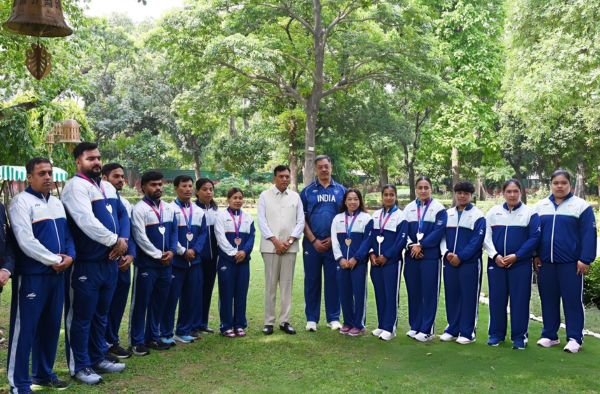
India’s 39-medal campaign was not merely a story of podium finishes or national records. It was a story of geographical transformation, one that revealed how sporting excellence is spreading across the country and reshaping India’s high-performance ecosystem.
India concluded the Games with 39 medals, comprising 13 gold, 17 silver and nine bronze, to finish fourth in the medal standings. While India matched Scotland’s tally of 13 gold medals, it edged ahead courtesy of a superior silver medal count, collecting 17 silvers compared to Scotland’s eight. For a 122-member contingent competing across all 10 sports on the streamlined Glasgow 2026 programme, the result reflected both consistency and depth rather than reliance on a handful of superstar athletes.
Yet, perhaps the most significant statistic from Glasgow was not found in the medal table. Sixteen different states and Union Territories contributed medal winners to India’s campaign, illustrating how sporting talent is becoming increasingly decentralised. From Haryana’s boxing rings to Tripura’s judo mats, from Maharashtra’s athletics tracks to Manipur’s weightlifting halls, India’s medal story was written in multiple languages, cultures and sporting traditions.
The distribution signals a shift in the country’s sporting identity. Haryana once again emerged as India’s sporting powerhouse, producing 11 medal winners and accounting for seven of the country’s 13 gold medals. It was a remarkable contribution that reaffirmed the state’s long-standing reputation as India’s factory for elite athletes. Champions including Sharmila Dhankar, Preeti Pawar, Jaismine Lamboria, Sakshi Chaudhary, Priya Ghanghas, Sachin Siwach and Ankush Panghal all stood atop the podium, while Olympic champion Neeraj Chopra added another silver medal to his already glittering international résumé.
Haryana’s sustained success is no coincidence. The state has invested heavily in grassroots coaching, wrestling akharas, boxing academies, athletics infrastructure and athlete welfare schemes for more than a decade. Government incentives for medal winners, combined with a deeply embedded sporting culture, have consistently produced athletes capable of competing on the global stage. Glasgow 2026 was simply another chapter in that continuing success story.
However, reducing India’s campaign to Haryana alone would overlook the larger narrative unfolding across the country. Manipur continued to justify its status as one of India’s most productive sporting states despite its relatively small population.
Four medal winners emerged from the northeastern state, led by weightlifting icon Mirabai Chanu, who successfully defended her Commonwealth title to become only the second Indian athlete to win three consecutive Commonwealth Games gold medals. Alongside Mirabai, Rishikanta Singh, Bindyarani Devi and Jadumani Singh ensured Manipur once again punched well above its demographic weight.
The significance of Mirabai’s achievement extends beyond another gold medal. Since winning her first Commonwealth title in 2018 before defending it in Birmingham in 2022, she has become one of India’s greatest weightlifters, inspiring a generation of athletes from the Northeast while proving that sustained excellence is possible through consistent investment and athlete support.
Elsewhere, new success stories emerged. Tripura celebrated one of the defining moments of the Games through Asmita Dey, who became India’s first-ever Commonwealth Games judo gold medallist. On the same day, Delhi’s Harsh Tokas added another judo gold, marking a watershed moment for a sport that has often existed outside India’s mainstream sporting conversation.
In boxing, India’s traditional strength continued to deliver results. Jaismine Lamboria emerged as one of the standout performers by capturing Commonwealth gold, joining a rich lineage of Indian women boxers that includes Mary Kom, Lovlina Borgohain and Nikhat Zareen. Her victory reinforced India’s position as one of the strongest boxing nations in the Commonwealth and highlighted the remarkable depth now present within the women’s programme.
Athletics also delivered encouraging signs.
With 10 medals, the discipline matched boxing as India’s most productive sport at the Games. While established names such as Neeraj Chopra and Murali Sreeshankar continued to perform, newer athletes including Sharmila Dhankar demonstrated that India’s athletics pipeline is steadily expanding beyond a handful of internationally recognised stars.
Weightlifting contributed another eight medals, once again confirming the sport as one of India’s most dependable sources of international success. The consistency across multiple weight categories suggests that India’s development system is producing athletes capable of sustaining success rather than relying solely on individual brilliance.
Perhaps the most encouraging aspect of Glasgow 2026 was the emergence of athletes from states that have historically contributed fewer international medallists. Bihar celebrated medals through Soman Rana and Jhandu Kumar. Rajasthan witnessed Arundhati Choudhary become a Commonwealth champion.
Chhattisgarh, Madhya Pradesh, Andhra Pradesh, Karnataka and Uttarakhand all featured on the medal map. Such diversity reflects the gradual impact of national initiatives like Khelo India, expanded Sports Authority of India training centres and improved state-level investment in athlete development. While challenges remain, the widening geographical spread suggests that elite sport in India is becoming more accessible than ever before.
There are, of course, lessons to be drawn. India’s fourth-place finish is commendable, but it also illustrates the increasing competitiveness of the Commonwealth sporting landscape. Nations such as Australia and England continue to dominate through sophisticated high-performance systems built on sports science, athlete monitoring and long-term planning. For India to bridge that gap consistently, the country must move beyond celebrating medal counts and focus equally on strengthening coaching education, sports medicine, talent identification and international exposure.
The state-wise medal distribution offers a valuable blueprint. Rather than replicating one centralised model, policymakers should examine why states like Haryana and Manipur continue to outperform expectations. Their success stems from strong local sporting cultures, community support, targeted investment and clear athlete pathways. Encouraging other states to develop similar ecosystems could significantly increase India’s medal potential not only at future Commonwealth Games but also at the Asian Games and Olympics.
Ultimately, Glasgow 2026 was about far more than finishing fourth in the medal standings. It showcased a nation whose sporting talent is no longer concentrated in a handful of regions but is emerging from every corner of the country. Sixteen states and Union Territories contributed to India’s medal tally, each adding a unique chapter to the nation’s sporting story.
The medals may have been won by individuals, but together they revealed something much larger: India’s future as a sporting nation will not be built by one champion, one discipline or one state. It will be built by an entire country that is finally learning how to produce excellence everywhere.

