

By the time the first medals of the Aichi-Nagoya Asian Games are decided, athletes will already have faced an unusual challenge before stepping into competition: finding a place to sleep. The 20th Asian Games officially open in Japan on September 19, but the tournament has already been drawn into an accommodation controversy after organisers chose not to build a conventional Athletes’ Village. Instead, more than 17,000 athletes and officials are being spread across hotels, an Italian cruise ship and temporary wooden, container-style cabins.
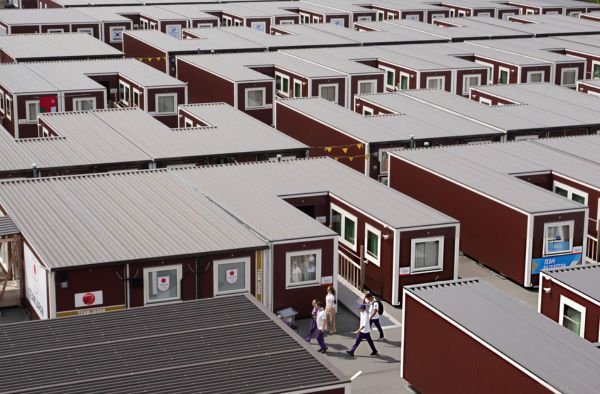
The decision was driven largely by cost considerations. The Olympic Council of Asia has defended the approach, saying a purpose-built village could have become an underused facility after the Games. Organisers had initially planned around 15,000 athletes and officials, but the number rose to around 17,000 following the addition of new sports. That calculation, however, has collided with the practical demands of housing athletes from across the continent.
The complaints became particularly visible after members of South Korea’s basketball delegation criticised the temporary cabins. Jung Jae-yong, vice president of the Korea Basketball Association, described the accommodation as the “worst-ever”, pointing to beds that were too short for players above two metres tall. “Athletes who are over two metres tall cannot even stretch their legs out on the beds. It’s unreasonable.” The criticism did not stop there. South Korean player Byeon Jun-hyeong posted footage showing a leaking sink and water on the floor of his accommodation, accompanying it with the message: “Please help us,”
The concerns have also extended beyond South Korea. Philippine Olympic Committee president Abraham Tolentino said all his athletes had been allocated rooms, but “some officials, like coaches, were moved to different hotels and Airbnb”. A cruise ship becomes an athletes’ village. One of the most striking features of the Games’ accommodation plan is the use of the Costa Serena, an Italian cruise ship that arrived in Nagoya on September 15. The 290-metre vessel is being used to house around 4,000 athletes and officials, turning the cruise liner into a floating Games village.
Another 2,000 people are expected to stay in the temporary cabins constructed around the port area, while others will be accommodated in hotels and alternative lodging. The arrangement has also produced logistical complications. Japan’s deputy Chef de Mission Hisashi Mizutori acknowledged that some room allocations created practical problems, including situations involving coaches and athletes being assigned together or men and women being allocated rooms together because the numbers worked mathematically.
“There have been cases where coaches, team officials and athletes have been assigned to the same room. There are also situations where room assignments were made purely based on the numbers, such as assigning five twin rooms for a group of five men and five women,” Mizutori said. “While the numbers match on paper, practically it creates challenging situations such as men and women being assigned together, coaches being assigned with athletes, or trainers who need to accommodate a lot of medical equipment being assigned together.”
Japan’s Olympic Committee had anticipated accommodation problems and reserved hotel rooms as a contingency. Organisers say they are negotiating changes and will use those alternatives where necessary. India prepares differently. The accommodation debate has also prompted a notable response from India. The Sports Authority of India built two temporary container-style accommodation units at its Bengaluru campus to familiarise athletes with the conditions they could encounter in Japan.
Each unit measures 40 feet by 10 feet and contains twin bedrooms, bathrooms, a small kitchen and a living area. The facilities are expected to be repurposed after the Games. Meanwhile, Japan’s organisers insist they are addressing complaints as they emerge. “If there are different opinions, then we will respond to them appropriately,” Aichi Governor and Games chief organiser Hideaki Omura said. “At this point, while we are responding to individual opinions, we have been improving everything as issues arise, and we will continue to respond that way.”
Weather adds another layer. The accommodation issue has arrived alongside an additional challenge: weather. Nagoya experienced exceptionally heavy rainfall earlier this month, with about 104mm falling in an hour. Hundreds of athletes were briefly evacuated from their accommodation, while rainwater also entered some competition venues. With the Games coinciding with Japan’s typhoon season, organisers are keeping contingency plans active. Japan Chef de Mission Kosei Inoue has acknowledged the possibility of further disruption, including potential competition delays or postponements.
The Games will feature 43 sports and bring together athletes from 45 countries and regions. Several competitions have already begun ahead of Saturday’s opening ceremony. The accommodation controversy has created an unusual opening chapter for an event built around sporting excellence. Japan’s decision reflects a clear attempt to control the cost and long-term legacy of hosting the Asian Games, while the organisers maintain that every athlete and official will have accommodation. But the complaints underline the difference between providing a bed and providing an environment in which elite athletes can properly prepare and recover.
For competitors, the tournament ultimately remains about what happens inside the arena, pool, court and field. Yet sleep, privacy, recovery and basic comfort are part of that performance environment. Aichi-Nagoya now has two challenges running simultaneously. The first is to deliver a successful Asian Games across 43 sports. The second is to ensure that an accommodation experiment designed around practicality does not become the defining story of the tournament. With the opening ceremony only hours away, organisers are now racing against the clock to make sure the Games are remembered for the medals, not the mattresses.

