

Naomi Osaka’s US Open 2026 campaign ended with a straight-sets defeat, but the bigger concern leaving Flushing Meadows was not the scoreline.
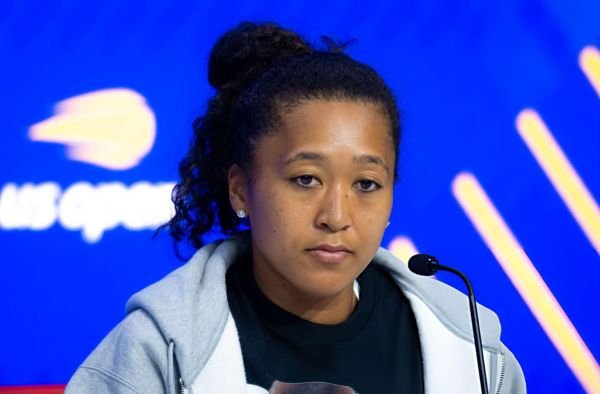
It was the lingering Achilles problem that increasingly restricted one of tennis’ most explosive players. The four-time Grand Slam champion was beaten 6-1, 6-4 by second seed and reigning Australian Open champion Elena Rybakina in just 66 minutes on Monday, bringing Osaka’s run to an end in the fourth round. Rybakina’s victory was emphatic, but Osaka’s physical limitations were impossible to overlook as she struggled to generate her usual power from the baseline and serve.
Osaka had already received treatment during her third-round victory over Elise Mertens, a 6-3, 3-6, 7-5 battle in which she fought through the problem to reach the last 16. The Japanese star had revealed before the Rybakina match that the Achilles issue had been troubling her since the grass-court season. Against Rybakina, however, the problem appeared to become significantly more intrusive.
“The last match I played, I felt a lot in my leg,” Osaka said. “Then this morning, it just got a lot worse. I felt like I played the best that I could given the situation. “I can’t really push off like I want, and when I land, it hurts a little,” Osaka added. “I was trying to figure out ways to, I guess, minimize it. I thought if I served a little slower the impact when I land would be less.”
Those limitations were particularly damaging against Rybakina, whose game is built around first-strike tennis, deep groundstrokes and a powerful serve. The Kazakh needed only 22 minutes to take the opening set and maintained control for most of the contest, allowing Osaka little opportunity to turn the match into the physical baseline battle she prefers. Osaka said she underwent an ultrasound before the match and another examination afterwards, with an MRI now likely as she searches for a clearer diagnosis.
“Yesterday I got an ultrasound, and then I got an ultrasound again just now, and I’m probably going to go get an MRI, because, honestly, I don’t really know too much about what’s going on,” she said. The timing of the injury will now become an important part of Osaka’s season planning. With the Asian swing still ahead, the 28-year-old is hoping to manage the problem rather than immediately shut down her season. “Thankfully we’re at the end of the year, so after the Asian swing, we do get two weeks off. I’m just going to make do with the time that I have and try to be smart about the amount of matches I play.”
The defeat nevertheless caps an encouraging Grand Slam season for Osaka, who has continued to rebuild her career following her return to the tour after maternity leave. She reached the third round at the Australian Open, advanced to the last 16 at Roland Garros and produced her best Wimbledon run with a quarter-final appearance. Her Wimbledon campaign included a notable victory over world No. 1 Aryna Sabalenka.
“I started the year injured,” she said. “I don’t know if this counts as ending the year injured, but I definitely learned a lot about myself, about my tennis. “I got the furthest that I’ve ever gotten in the French and in Wimbledon. Hopefully I can continue to build on that and just play more matches with these really good players, because I feel like I need those under my belt.”
For Rybakina, the victory marked another significant step in an increasingly impressive season. The Australian Open champion has now reached her first US Open quarter-final and remains firmly in contention for the world No. 1 ranking. She will face Olympic champion Zheng Qinwen in the quarter-finals.
Osaka’s US Open exit should not be viewed simply as another early Grand Slam departure. The result underlines a more important question surrounding her comeback: how much tennis can her body sustain as she attempts to return to the highest level?
Her Grand Slam results in 2026 suggest that the quality is still there. A Wimbledon quarter-final and a run to the fourth round in New York demonstrate that Osaka can still compete with the elite when physically sound. But the Achilles issue is a reminder that her next stage of development may depend as much on managing her workload as it does on improving her tennis.
Against Rybakina, Osaka was not beaten because she lacked ambition or belief. She was beaten because a player operating below full physical capacity was facing one of the most powerful opponents on tour. The immediate priority now is diagnosis, recovery and intelligent scheduling.
The encouraging part is that Osaka leaves New York with evidence that her best tennis is returning. The challenge is ensuring her body allows her to keep building on it.

