

Every transfer window has one move that goes beyond tactics or squad building. It becomes a statement about where power lies, how ambition is shifting and what the future of the sport could look like.
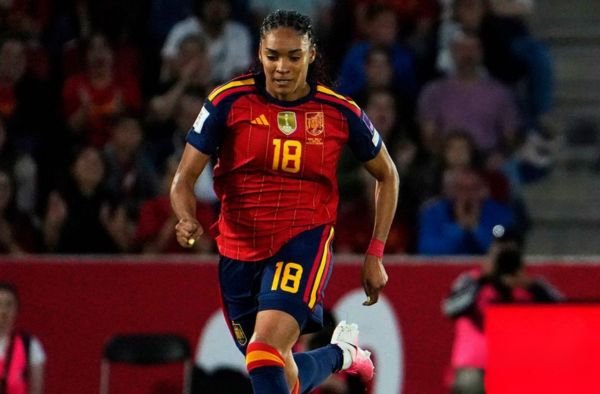
Salma Paralluelo‘s decision to leave Barcelona for OL Lyonnes is one such transfer. At just 22, the Spain international has already won almost everything club football has to offer. Four Liga F titles, three UEFA Women’s Champions League crowns, a FIFA Women’s World Cup and a reputation as one of the brightest attacking talents in the game made her one of the most sought-after players in world football. Yet rather than extending her stay at Barcelona, the club where she blossomed into a global star, Paralluelo has chosen a fresh challenge in France, signing a contract with OL Lyonnes until 2030.
The move is significant not simply because one of Europe’s biggest stars has changed clubs, but because it reflects the changing landscape of the women’s game. For years, Barcelona represented the pinnacle of women’s football. Their possession-based philosophy, homegrown talent and sustained success made them the benchmark for clubs across Europe. Players wanted to join Barcelona because trophies seemed almost guaranteed.
This summer has seen an unprecedented exodus from the Catalan giants. Salma Paralluelo follows Alexia Putellas, Ona Batlle and Mapi León in departing the club, leaving behind a squad that, until recently, appeared almost untouchable. Financial pressures, contract negotiations and an increasingly competitive transfer market have exposed the reality that even Europe’s most successful women’s club is no longer immune to losing its biggest stars. Paralluelo’s departure perhaps hurts Barcelona the most because of what she represents.
She was never merely another talented forward. Born in Zaragoza, Paralluelo first made headlines as a track-and-field prodigy, winning national youth titles in sprinting before committing fully to football. Her extraordinary pace became one of her defining weapons, but it was her intelligence, versatility and composure in front of goal that elevated her into the world’s elite. Barcelona signed her from Villarreal in 2022, recognising a player whose ceiling seemed limitless.
She scored 72 goals in 131 appearances, lifted 15 trophies and became a player for football’s biggest occasions. Her final match in a Barcelona shirt perfectly captured her importance. In the 2026 UEFA Women’s Champions League final against OL Lyonnes, she scored twice and provided an assist as Barcelona claimed a commanding 4-0 victory. Few players leave a club after producing perhaps the defining performance of their career.
Now, in one of football’s fascinating twists, she joins the very club she helped dismantle in that final. The decision speaks volumes about Lyonnes’ ambitions. Under Michele Kang’s ownership, OL Lyonnes have embarked on an aggressive rebuilding project designed to restore the club’s dominance in European football. The arrivals of Caroline Weir, Johanna Rytting Kaneryd and now Paralluelo underline that intent. The appointment of Jonatan Giráldez, who previously coached Paralluelo at Barcelona, also provides familiarity as she begins the next chapter of her career.
Equally telling is what the transfer reveals about the financial evolution of women’s football. According to multiple reports, Chelsea explored signing Paralluelo but chose not to match salary expectations that exceeded £1 million per year. A figure of that magnitude would have seemed unimaginable in the women’s game just a few years ago. Today, it reflects a market where elite talent is finally beginning to command salaries closer to their sporting value, even if significant gaps remain compared with the men’s game.
For Paralluelo, however, this move cannot be reduced to finances alone. She arrives in France as one of the most decorated young footballers in the world. Since making her senior Spain debut in 2022, she has earned more than 50 international caps, helped Spain win the 2023 FIFA Women’s World Cup and played a key role in their run to the UEFA Women’s Euro 2025 final. Her ability to perform consistently for both club and country has made her one of the leading contenders to dominate women’s football over the next decade.
Perhaps the biggest question now concerns Barcelona rather than Lyon. The departure of several cornerstone players raises difficult questions about succession planning and financial sustainability. Barcelona’s academy remains one of the finest in Europe, and talents such as Aitana Bonmatí and Claudia Pina ensure quality still exists. But replacing experience, leadership and match-winning ability on this scale is rarely straightforward. At 22, she combines elite experience with years still ahead of her. She has already conquered Europe, become a world champion and established herself among the game’s finest attackers. Yet her best football may still lie ahead.
That is what makes this transfer so compelling. It is not simply about one player changing clubs. It is about Europe’s balance of power shifting once again. It is about ambitious clubs investing heavily, established giants confronting difficult realities and world-class players recognising that success is no longer concentrated in a single destination. Whether she can inspire OL Lyonnes back to the summit of European football will determine whether this becomes one of the defining transfers of the modern women’s game.

